
Protected Land Area Percentage 2019
Protected land area percentage shows the share of a country's land dedicated to conservation and biodiversity.
Interactive Map
Complete Data Rankings






































































































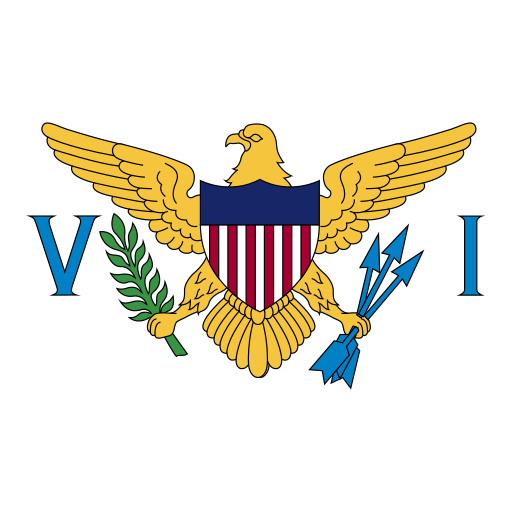


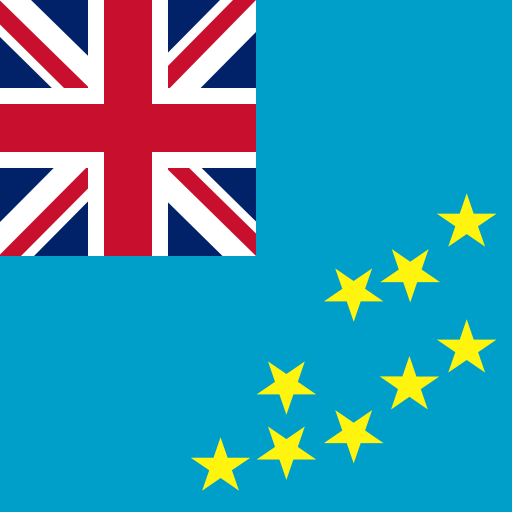


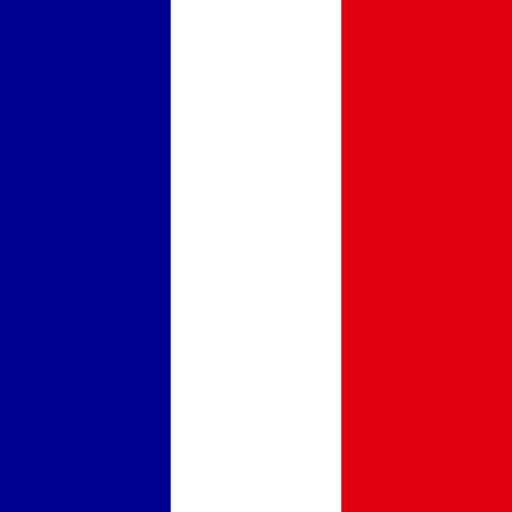







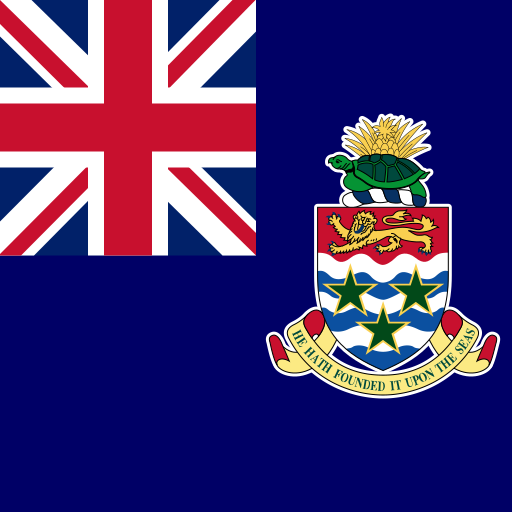





































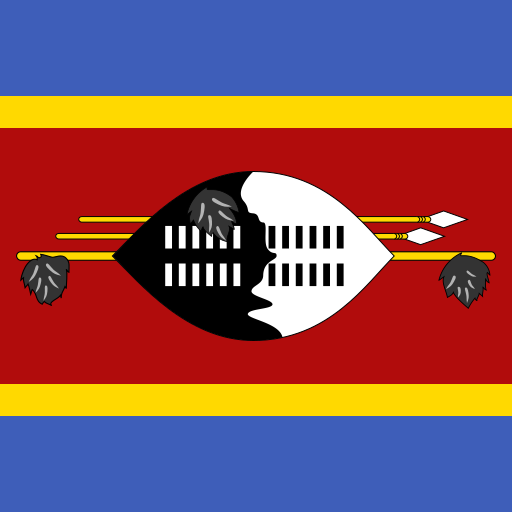















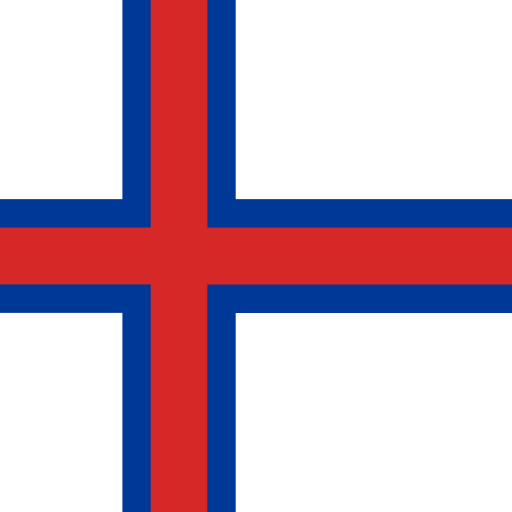

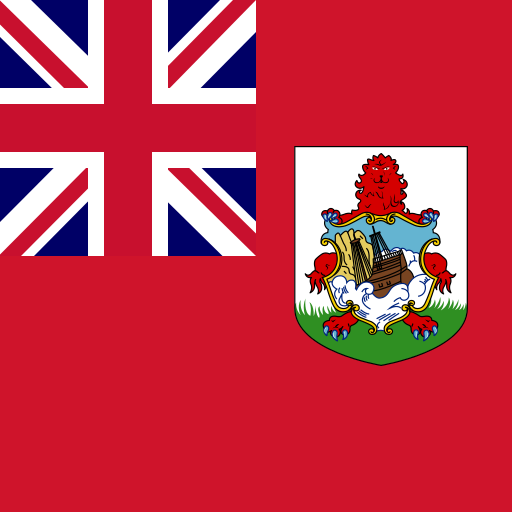
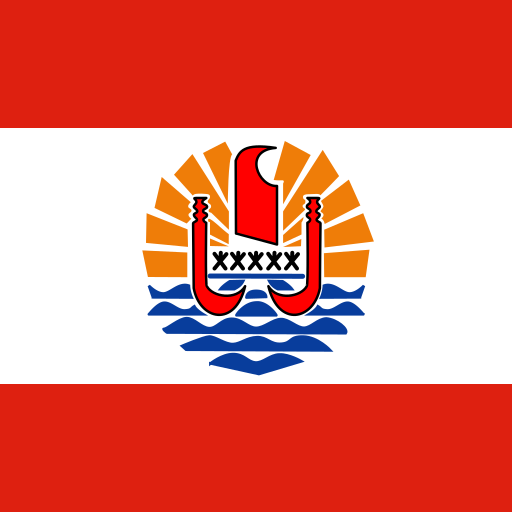





- #1
 New Caledonia
 - #2
 Venezuela
 - #3
 Slovenia
 - #4
 Luxembourg
 - #5
 Seychelles
 - #6
 Bhutan
 - #7
 Brunei Darussalam
 - #8
 Turks and Caicos Islands
 - #9
 Palau
Palau - #10
 Liechtenstein
Analysis: These countries represent the highest values in this dataset, showcasing significant scale and impact on global statistics.
- #211
 Somalia
 - #210
 Micronesia (Fed. States of)
 - #209
 Afghanistan
 - #208
 Turkey
 - #207
 Libya
Libya - #206
 Lesotho
 - #205
 Mauritania
 - #204
 Syrian Arab Republic
 - #203
 Yemen
Yemen - #202
 Maldives
Context: These countries or territories have the lowest values, often due to geographic size, administrative status, or specific characteristics.
Analysis & Context
In 2019, the country with the highest Protected Land Area Percentage was New Caledonia with 59.7%, while the global range spanned from a minimum of 1.40% to a maximum of 59.70%. The global average for Protected Land Area Percentage in 2019 was 18.66%, providing a benchmark for conservation efforts worldwide.
Conservation Leaders and Their Strategies
Several countries have prioritized conservation, resulting in high percentages of protected land. New Caledonia leads globally with 59.7% of its land designated for conservation. This is largely due to its unique biodiversity, including numerous endemic species, which necessitates extensive conservation measures. Venezuela follows closely at 54.1%, leveraging its vast natural landscapes and diverse ecosystems, such as the Amazon rainforest, to bolster conservation efforts.
Slovenia and Luxembourg, with protected land percentages of 53.6% and 51.2% respectively, illustrate the role of strong environmental policies. Slovenia's commitment to sustainable tourism and biodiversity preservation has contributed to its high ranking. Similarly, Luxembourg's strategic use of its limited land for conservation reflects a national priority on environmental sustainability.
Challenges in Low-Percentage Countries
Countries at the lower end of the spectrum face significant challenges in land conservation. Bosnia and Herzegovina reports the lowest percentage at 1.4%. This can be attributed to economic and political factors that prioritize development over conservation. Similarly, Iraq and Djibouti, with protected areas of 1.5% and 1.6% respectively, struggle with resource allocation amidst socio-political instability, which limits their capacity for environmental protection.
In the Solomon Islands and French Polynesia, protected land percentages are 1.8% and 2.0%. These regions face geographical challenges, such as small land masses and dispersed populations, which can complicate the establishment and maintenance of protected areas.
Significant Year-over-Year Changes
The year 2019 saw notable changes in protected land percentages, with some countries making substantial increases. Liechtenstein experienced the most significant rise, increasing by 30.30%, a 254.6% increase from the previous year. This surge can be attributed to new policy initiatives aimed at expanding protected areas.
Saint Kitts and Nevis also demonstrated a remarkable increase of 19.60% or 593.9%, reflecting a strategic shift towards environmental conservation. Palau added 16.20% to its protected areas, a reflection of its commitment to marine conservation, given its rich marine biodiversity.
Conversely, some countries experienced decreases in protected land percentages. Tonga saw a reduction of 3.30% or -20.8%, which may be due to reclassification of land use or economic pressures. Finland and Denmark also reported declines of 1.70% and 0.90% respectively, possibly due to adjustments in land management policies.
Policy and Economic Influences on Conservation
The data reveals that both policy frameworks and economic conditions heavily influence protected land area percentages. Countries like Bhutan and Brunei Darussalam, with over 40% of their land protected, benefit from policies that integrate conservation into national development plans. Bhutan's Gross National Happiness index, which includes environmental conservation as a key component, exemplifies how policy can drive high conservation percentages.
In contrast, countries with lower percentages often prioritize economic development over conservation, as seen in Sudan and Lebanon. Economic pressures and limited financial resources can hinder the ability to allocate land for protection, illustrating the complex balance between development and conservation. However, as global awareness of environmental issues grows, there is potential for increased international support and collaboration to enhance conservation efforts even in economically constrained regions.
Frequently Asked Questions About Protected Land Area Percentage in 2019
Which country had the highest percentage of protected land area in 2019?
New Caledonia had the highest percentage of protected land area in 2019, with 59.7%.
What was the average percentage of protected land area across all countries in 2019?
The average percentage of protected land area across all countries in 2019 was 17.71%.
Which country had the lowest percentage of protected land area in 2019?
Somalia had the lowest percentage of protected land area in 2019, with 0%.
What was the median percentage of protected land area in 2019?
The median percentage of protected land area in 2019 was 15.7%.
How many countries were included in the dataset for protected land area percentage in 2019?
The dataset for protected land area percentage in 2019 included 211 countries.
Which countries were in the top 3 for protected land area percentage in 2019?
The top 3 countries for protected land area percentage in 2019 were New Caledonia with 59.7%, Venezuela with 54.1%, and Slovenia with 53.6%.
Insights by country
Cyprus
In 2019, Cyprus ranked #17 globally with a Protected Land Area Percentage of 38.5 %. This figure is notably higher than the global average, reflecting Cyprus's commitment to environmental conservation. The country's diverse ecosystems, including forests and coastal areas, are protected through various national policies aimed at preserving its unique biodiversity and natural heritage.
North Macedonia
In 2019, North Macedonia ranked #136 globally with a Protected Land Area Percentage of 10.6%. This figure is below the European average, indicating a need for enhanced conservation efforts compared to its neighbors. The country's relatively low percentage can be attributed to its developing economy and competing land use pressures, including agriculture and urban development, which often prioritize economic growth over environmental preservation.
Slovakia
In 2019, Slovakia ranked #22 globally with a Protected Land Area Percentage of 37.6 %. This figure is significantly higher than the global average, reflecting a strong commitment to conservation compared to many neighboring countries. The country's rich biodiversity and extensive natural parks, driven by both geographic features and robust environmental policies, contribute to this high percentage.
Isle of Man
In 2019, the Isle of Man ranked #171 globally with a Protected Land Area Percentage of 5.5%. This figure is significantly lower than the global average, indicating limited land set aside for conservation compared to many other countries. The Isle of Man's relatively small land area and its focus on economic development may contribute to this low percentage, as land use is often prioritized for residential and commercial purposes over protection initiatives.
Tanzania
Tanzania ranked #19 globally with a Protected Land Area Percentage of 38.2 % in 2019. This figure is significantly higher than the global average, highlighting Tanzania's commitment to conservation. The country's diverse ecosystems, including the Serengeti and Mount Kilimanjaro, drive its extensive protected areas, supported by policies aimed at preserving biodiversity and promoting eco-tourism. Additionally, the rich cultural heritage of indigenous communities plays a crucial role in the management of these protected lands.
Kenya
In 2019, Kenya ranked #129 globally with a Protected Land Area Percentage of 12.4%. This figure is below the global average, indicating a significant opportunity for conservation efforts compared to countries with higher percentages, such as Bhutan, which leads with over 50%. The relatively low percentage in Kenya is influenced by factors such as rapid urbanization and agricultural expansion, which often encroach upon natural habitats, alongside ongoing challenges in enforcing environmental protection policies.
Slovenia
In 2019, Slovenia achieved a global rank of #3 with a Protected Land Area Percentage of 53.6%. This percentage is significantly higher than the global average, highlighting Slovenia's commitment to environmental conservation. The country's diverse landscapes, including the Julian Alps and numerous national parks, coupled with strong governmental policies focused on sustainability, have driven this high level of protected land.
Cameroon
In 2019, Cameroon had a Protected Land Area Percentage of 10.9 %, ranking #134 out of 211 countries. This percentage is below the global average, reflecting challenges in conservation compared to top-ranked nations like Venezuela, which protects over 50% of its land. Key drivers for Cameroon's low protection rate include economic pressures from agriculture and logging, alongside political factors that hinder effective land management policies.
Saudi Arabia
In 2019, Saudi Arabia had a Protected Land Area Percentage of 4.8 %, ranking #174 out of 211 countries. This percentage is notably lower than the global average, which reflects a trend where many countries prioritize urban development and industrial expansion over environmental conservation. Factors contributing to Saudi Arabia's low protected land area include its vast desert geography, economic reliance on oil, and limited policy initiatives aimed at enhancing biodiversity conservation.
Bolivia
In 2019, Bolivia ranked #31 globally with a Protected Land Area Percentage of 30.9 %. This figure is significantly higher than the global average, reflecting Bolivia's commitment to conservation amidst its rich biodiversity. The country's extensive protected areas are driven by its diverse ecosystems, including the Amazon rainforest, and strong environmental policies aimed at preserving natural resources for future generations.
Data Source
Share of land area that is protected | Our World in Data
Our World in Data is an online publication that presents research and data on various global issues, including environmental statistics. The dataset on the share of land area that is protected provides country-level information on the proportion of terrestrial areas designated for conservation.
Visit Data SourceHistorical Data by Year
Explore Protected Land Area Percentage data across different years. Compare trends and see how statistics have changed over time.
More Environment Facts
Above-Ground Biomass in Forest (tonnes/ha)
Above-ground biomass in forest measures carbon storage per hectare. Explore rankings and compare data across 266+ countries with interactive maps.
View dataBrowse All Environment
Explore more facts and statistics in this category
All Categories
Discover more categories with comprehensive global data