
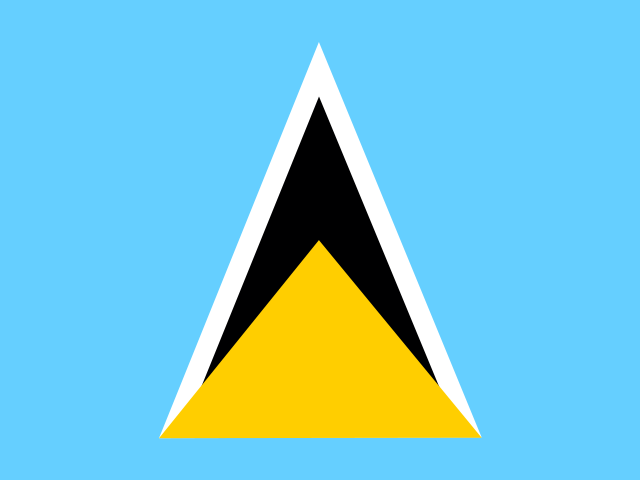
Location
Saint Lucia is in the Caribbean, island between the Caribbean Sea and North Atlantic Ocean, north of Trinidad and Tobago. It has no land borders and has 158 km of coastline. The capital is Castries.
Saint Lucia population 2026: 180,555 — growth, rank & history →Key Statistics for 2026
Total population
Population Change
Median age of population
Population density
Life expectancy at birth
Agricultural land
Dam capacity per capita
Female population of reproductive age
Health Care Spending per Capita
Learning-adjusted years of school
Length of paid parental leave for mother
History
Saint Lucia's history is marked by the convergence of indigenous cultures and European colonial ambitions. The island was originally inhabited by the Arawak and Carib peoples, who arrived around 2500 BC and 1000 AD, respectively. These early inhabitants relied on fishing, hunting, and subsistence agriculture. The island's lush landscapes and natural resources made it an attractive location for European explorers. The first recorded sighting by Europeans occurred in 1498 when Christopher Columbus arrived, naming it "Santa Lucia" in honor of Saint Lucy, whose feast day fell on December 13.
In the ensuing centuries, Saint Lucia became a focal point for European powers vying for control over the Caribbean. The island changed hands between the French and British numerous times during the 17th and 18th centuries, reflecting the broader conflicts in Europe. The Treaty of Paris in 1763 officially ceded the island to the British, but it was not until the Treaty of Versailles in 1783 that the British secured permanent control. During this period, the economy of Saint Lucia was predominantly based on sugar cane production, which relied heavily on enslaved African labor, leading to a significant demographic shift and the establishment of a plantation economy.
The 19th century was marked by a series of social and political changes, culminating in the abolition of slavery in 1834. This pivotal moment led to a transformation of the labor force and an eventual shift towards a more diverse economy. The island's modern history began to take shape in the mid-20th century when movements for self-governance gained momentum. In 1967, Saint Lucia was granted full internal self-government, followed by independence from Britain on February 22, 1979.
In recent decades, Saint Lucia has maintained a stable political environment, although it has faced challenges from natural disasters and economic fluctuations. The island is a member of various international organizations, including the Caribbean Community (CARICOM) and the Organisation of Eastern Caribbean States (OECS). Today, Saint Lucia is known for its vibrant cultural heritage, stunning natural landscapes, and as a prominent tourist destination. The island's historical significance continues to resonate through its festivals, traditions, and the resilience of its people, who have navigated a complex colonial legacy to forge a unique national identity.
Geography
Saint Lucia is an island nation located in the eastern Caribbean Sea, situated between the French territories of Martinique to the north and Saint Vincent and the Grenadines to the south. This small island covers an area of approximately 617 square kilometers (238 square miles) and is part of the Lesser Antilles archipelago. The country is characterized by its volcanic origin, which contributes to its unique geographical features and lush landscapes. The capital city, Castries, lies on the western coast, providing a natural harbor for maritime activities.
The physical features of Saint Lucia are diverse, with the island being dominated by a mountainous terrain that includes the famous Pitons, specifically the Gros Piton and Petit Piton, which are recognized as UNESCO World Heritage Sites. These iconic volcanic spires rise dramatically from the sea and are a significant attraction for tourists and hikers. The interior of the island is marked by dense rainforests, numerous rivers, and valleys, with the largest river, the Roseau River, flowing through the island's central region. The varied elevation and rich volcanic soil contribute to a rich biodiversity, making Saint Lucia a haven for endemic species.
Saint Lucia experiences a tropical climate, characterized by a wet season from June to November and a dry season from December to May. Average temperatures typically range from 24°C to 31°C (75°F to 88°F), with humidity levels being high throughout the year. The island is also subject to seasonal hurricanes, particularly during the Atlantic hurricane season, which can significantly impact its weather patterns and environment. Rainfall is concentrated during the wet season, often leading to lush vegetation and vibrant ecosystems.
In terms of natural resources, Saint Lucia is endowed with fertile soil that supports agriculture, particularly banana and cocoa cultivation, which historically formed the backbone of its economy. The island also has potential reserves of geothermal energy due to its volcanic activity, which presents opportunities for sustainable energy development. However, environmental challenges such as coastal erosion, deforestation, and vulnerability to climate change pose significant threats to the island's ecological balance and natural beauty. Conservation efforts are critical to preserving Saint Lucia's unique landscapes and biodiversity for future generations.
Government
Saint Lucia operates as a parliamentary democracy within the framework of a constitutional monarchy. The nation recognizes the British monarch as its head of state, represented locally by a Governor-General. The political system is characterized by a multiparty system, encouraging a diverse political landscape where various parties compete for power and influence. The Prime Minister, appointed from the majority party in the House of Assembly, serves as the head of government and is responsible for the day-to-day administration and implementation of laws.
The government is structured into three distinct branches: the executive, legislative, and judicial. The executive branch is led by the Prime Minister and includes a Cabinet made up of ministers responsible for various government departments. The legislative branch consists of a bicameral parliament, which includes the House of Assembly and the Senate. The House of Assembly comprises 17 elected members, while the Senate consists of 11 appointed members, including six appointed by the Prime Minister and five by the Leader of the Opposition. The judicial branch is independent and headed by the Eastern Caribbean Supreme Court, which has jurisdiction over various legal matters in Saint Lucia and other member states of the Eastern Caribbean.
Key institutions that play a significant role in the governance of Saint Lucia include the Electoral Commission, which oversees the conduct of free and fair elections, and the Office of the Prime Minister, which coordinates government policies and initiatives. The political landscape is dominated by two major parties: the Saint Lucia Labour Party (SLP) and the United Workers Party (UWP). These parties have alternated in power since the late 20th century, reflecting the dynamic and competitive nature of Saint Lucian politics.
The electoral system in Saint Lucia is based on the principle of universal suffrage, allowing all citizens aged 18 and over to vote. Elections are held at least every five years, and the process is generally considered transparent and competitive. The last general election took place in 2021, which resulted in a decisive victory for the SLP. The political engagement of the populace and the presence of civil society organizations contribute to a vibrant democratic environment in Saint Lucia, fostering active participation in the political process.
Economy
The economy of Saint Lucia is classified as a mixed economy, characterized by a blend of public and private enterprise. As of 2023, the nation's Gross Domestic Product (GDP) stands at approximately $2.1 billion, with a per capita GDP of around $14,000. The economy is heavily reliant on tourism, which contributes significantly to national income, accounting for about 65% of the GDP and employing a substantial portion of the workforce. Additionally, the agricultural sector, though diminished over the years, remains vital, focusing on banana production and other crops such as cocoa and nutmeg.
Major industries in Saint Lucia include tourism, agriculture, and manufacturing. The tourism sector attracts thousands of visitors each year, drawn to the island's natural beauty, beaches, and cultural heritage. The agricultural sector, historically the backbone of the economy, has shifted towards more diverse crops and agro-processing, as the banana industry has faced challenges from international competition. Meanwhile, manufacturing activities are concentrated in food processing and light manufacturing, providing essential goods for both local consumption and export.
Saint Lucia's trade relationships are primarily with countries in the Caribbean, North America, and Europe. The island exports a variety of products, including bananas, cocoa, and alcoholic beverages, while imports largely consist of machinery, food products, and fuels. The nation is a member of the Organisation of Eastern Caribbean States (OECS) and the Caribbean Community (CARICOM), which facilitate regional trade and economic cooperation. The trade balance is often negative, with imports exceeding exports, which poses a challenge for the economy.
Despite its reliance on tourism and agriculture, Saint Lucia faces several economic challenges, including vulnerability to natural disasters, fluctuating global market prices, and high public debt levels. However, opportunities for growth exist in diversifying the economy, enhancing the tourism experience, and investing in renewable energy sources. The government is also exploring initiatives to promote innovation and entrepreneurship, which could further bolster economic resilience and sustainability in the coming years.
Culture
Saint Lucia is a vibrant island nation located in the Caribbean, known for its rich cultural tapestry that reflects a blend of various ethnic groups, languages, and religions. The population is predominantly of African descent, with a significant number of individuals identifying as mixed-race. English is the official language, while Saint Lucian Creole French, locally known as Kwéyòl, is widely spoken and serves as a symbol of national identity. The primary religion practiced on the island is Christianity, with Roman Catholicism being the most prevalent denomination, although there is also a notable presence of Protestant faiths, reflecting the diverse spiritual landscape of the society.
The cultural traditions and customs of Saint Lucia are deeply rooted in its history of colonialism and African heritage. Festivals play a crucial role in the cultural life of the island, with events like the annual Saint Lucia Carnival showcasing colorful parades, masquerade bands, and calypso music. The islanders also celebrate Jounen Kweyol, a Creole Day that highlights the local culture through traditional foods, music, and attire, reinforcing a sense of community and pride in their heritage. Additionally, the practice of storytelling and folklore is integral, as it preserves the oral history and traditions passed down through generations.
Saint Lucia's artistic expression is prominently displayed through its music, dance, and literature. The island has produced renowned musicians who blend traditional Caribbean sounds with modern influences, notably in genres such as soca, reggae, and calypso. Events like the Saint Lucia Jazz & Arts Festival attract international attention, demonstrating the island's commitment to promoting its artistic talent. In literature, local authors often draw inspiration from the island's natural beauty and cultural experiences, contributing to a burgeoning literary scene that reflects the unique identity of Saint Lucia.
Culinary traditions in Saint Lucia are as diverse as its culture, with a cuisine that features an array of flavors influenced by African, French, and East Indian traditions. Dishes such as green fig and saltfish, callaloo soup, and creole chicken are staples of the local diet, showcasing the island's agricultural bounty. Daily life in Saint Lucia often revolves around communal gatherings, whether at markets, festivals, or family celebrations, reinforcing the strong sense of community that characterizes the island's culture. The interplay of traditions, music, and cuisine creates a rich cultural landscape that continues to evolve while honoring its historical roots.
About This Data
This page displays comprehensive statistical data for Saint Lucia for the year 2026. All data points are sourced from authoritative international organizations and are regularly updated to ensure accuracy and reliability.
Click on any statistic to explore more detailed information, see how Saint Lucia compares with other countries, and view historical trends.
Primary Data Sources
CIA World Factbook
Comprehensive country profiles and demographic statistics from the Central Intelligence Agency
Learn moreUnited Nations Statistics
Global demographic data and population projections from UN agencies and research divisions
Learn moreWorld Bank Open Data
Development indicators and comprehensive population metrics from the World Bank database
Learn moreCompare Saint Lucia with other countries
Side-by-side comparisons across population, GDP, geography, and more.
Frequently Asked Questions About Saint Lucia
Which continent is Saint Lucia in?▾
Saint Lucia is in North America, in the Caribbean subregion according to the UN geoscheme.
What is the population of Saint Lucia in 2026?▾
The population of Saint Lucia in 2026 is estimated to be approximately 180,554.5 persons.
What is the total area of Saint Lucia?▾
Saint Lucia covers an area of approximately 617 square kilometers.
What is the GDP of Saint Lucia?▾
The Gross Domestic Product (GDP) of Saint Lucia is 3,202,704,444.44 US dollars.
What is the official language of Saint Lucia?▾
The official language of Saint Lucia is English.
What is the capital city of Saint Lucia?▾
The capital city of Saint Lucia is Castries.
What is the life expectancy in Saint Lucia?▾
The life expectancy at birth in Saint Lucia is approximately 77.97 years.