
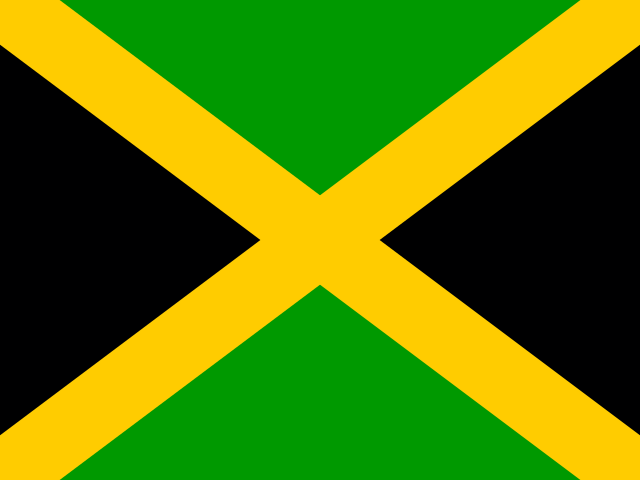
Location
Jamaica is in the Caribbean, island in the Caribbean Sea, south of Cuba. It has no land borders and has 1,022 km of coastline. The capital is Kingston.
Jamaica population 2026: 2.83 Million — growth, rank & history →Key Statistics for 2026
Total population
Population Change
Median age of population
Population density
Life expectancy at birth
Agricultural land
Apple Import Volume
Current Bank Rate
Dam capacity per capita
Female population of reproductive age
Health Care Spending per Capita
History
The history of Jamaica is rich and complex, beginning with its early inhabitants, the Arawak and Taíno peoples, who arrived around 600 AD. These indigenous groups thrived on the island, developing agriculture, fishing, and pottery, and they established a vibrant culture characterized by trade and social organization. The arrival of Europeans began in 1494 when Christopher Columbus landed on the island during his second voyage to the New World, claiming it for Spain. This marked the beginning of a dramatic transformation of Jamaica’s landscape and society, as Spanish colonization led to the decline of the indigenous population due to disease and enslavement.
During the medieval period, Jamaica underwent significant changes following its capture by the English in 1655. The new colonial power transformed the island into a major sugar-producing colony, relying heavily on the labor of enslaved Africans who were forcibly transported to Jamaica through the transatlantic slave trade. The plantation system flourished, resulting in immense wealth for colonial planters while subjecting enslaved Africans to harsh and brutal conditions. The combination of African cultural influences and the hardships of slavery contributed to the development of a unique Jamaican identity, which would later play a crucial role in the island's social and political movements.
Jamaica's modern history is marked by significant events, particularly the struggle for independence from British colonial rule. The island experienced a series of labor uprisings in the 1930s, highlighting the grievances of the working class and leading to reform initiatives. Jamaica achieved self-government in 1944 and became an independent nation on August 6, 1962. The post-independence period saw political volatility, economic challenges, and social change, with the rise of both reggae music and Rastafarian culture, which gained international recognition and reflected the island's rich cultural heritage.
In recent years, Jamaica has continued to navigate its historical legacy while addressing contemporary issues. The island has made strides in tourism, which is a vital sector of its economy, attracting millions of visitors annually to its stunning beaches and vibrant culture. However, challenges such as crime, poverty, and economic inequality persist. The nation has also become known for its influential role in global music and sports, particularly through the achievements of athletes like Usain Bolt and the lasting impact of reggae legends such as Bob Marley. Jamaica’s historical significance is evident not only in its cultural contributions but also in its ongoing journey towards social and economic development.
Geography
Jamaica is an island nation located in the Caribbean Sea, specifically situated to the south of Cuba and west of Hispaniola, which is home to Haiti and the Dominican Republic. The country is the third-largest island in the Caribbean, covering an area of approximately 10,991 square kilometers (4,244 square miles). Jamaica's coastline is characterized by stunning beaches, rocky cliffs, and numerous natural harbors, contributing to its appeal as a popular tourist destination.
The island's topography is predominantly mountainous, with the Blue Mountains being the most notable range. The highest peak, Blue Mountain Peak, rises to an elevation of 2,256 meters (7,402 feet) and is renowned for its coffee cultivation. The terrain features a variety of landscapes, including rolling hills, limestone caves, and fertile valleys. Major rivers, such as the Black River and the Rio Cobre, play a crucial role in the island's ecosystem and agriculture, providing essential water resources for both inhabitants and wildlife.
Jamaica experiences a tropical climate, characterized by two distinct seasons: a wet season from May to November and a dry season from December to April. Average temperatures range from 25°C to 30°C (77°F to 86°F), with coastal areas being milder than the interior. The island is also subject to hurricanes, particularly during the Atlantic hurricane season, which can significantly impact its weather patterns and infrastructure.
The natural resources of Jamaica are diverse, including bauxite, limestone, and various agricultural products such as sugarcane, bananas, and coffee. The country is rich in biodiversity, with numerous national parks and protected areas that safeguard its unique flora and fauna. Environmental characteristics such as coral reefs, mangroves, and tropical forests contribute to Jamaica's ecological significance, although challenges including deforestation and climate change pose threats to its natural landscapes.
Government
Jamaica operates as a parliamentary democracy under a constitutional monarchy, where the monarch is the head of state, represented by a Governor-General. The political system is characterized by a multi-party framework, with the two dominant parties being the People's National Party (PNP) and the Jamaica Labour Party (JLP). The Prime Minister, typically the leader of the majority party in the House of Representatives, serves as the head of government, overseeing the executive branch and implementing policies and laws.
The structure of the Jamaican government is comprised of three branches: the executive, legislative, and judicial. The executive branch is led by the Prime Minister and includes the Cabinet, which is composed of ministers appointed by the Prime Minister. The legislative branch is bicameral, consisting of the House of Representatives and the Senate. Members of the House of Representatives are elected for five-year terms, while Senators are appointed, with a mix of selections made by the Prime Minister and the opposition leader. The judicial branch operates independently, with the highest court being the Judicial Committee of the Privy Council in London, although Jamaica has established its own Caribbean Court of Justice as an alternative.
Key institutions in Jamaican governance include the Office of the Prime Minister and the Parliament, which plays a crucial role in the legislative process. The Governor-General, currently Sir Patrick Allen, acts as the representative of the monarch and performs various ceremonial duties, as well as functions related to the legislative process, such as the opening of Parliament. The political landscape is marked by a history of vibrant political competition and has seen varying shifts in power between the two main parties, reflecting the dynamic nature of Jamaican politics.
Jamaica's electoral system is based on universal suffrage, allowing citizens aged 18 and older to vote in elections. The electoral process is overseen by the Electoral Commission of Jamaica, ensuring free and fair elections. The country typically holds general elections every five years, and the last parliamentary election was held in September 2020. The political environment is influenced by social issues, economic challenges, and public policies, with a strong emphasis on community engagement and civil rights in shaping the electoral landscape.
Economy
The economy of Jamaica operates under a mixed economic system, characterized by both private and public sectors. As of 2023, Jamaica's Gross Domestic Product (GDP) is approximately $16 billion, with a GDP per capita of around $5,700. The country relies heavily on tourism, agriculture, and mining, which together play a significant role in driving economic growth. The Jamaican economy has shown resilience, with a focus on improving infrastructure and increasing foreign investment, particularly in the tourism sector, which is a vital source of foreign exchange and employment.
Major industries in Jamaica include tourism, agriculture, mining, and manufacturing. The tourism sector is the largest contributor to the economy, attracting millions of visitors annually, primarily from North America and Europe. Agriculture remains essential, with key products such as sugar, bananas, and coffee, particularly the renowned Blue Mountain coffee. Mining, especially in bauxite and alumina, is another critical sector, with Jamaica being one of the largest producers of bauxite globally. Additionally, the manufacturing sector produces a variety of goods, including food products, beverages, and textiles, further diversifying the economy.
Jamaica engages in trade with various international partners, with significant export relationships primarily with the United States, Canada, and the United Kingdom. Major exports include bauxite, alumina, sugar, and coffee, contributing to the country's foreign exchange earnings. Conversely, Jamaica imports machinery, food, and petroleum products, with the United States being its largest source of imports. The trade balance has been a point of concern, as imports often exceed exports, leading to persistent trade deficits that impact the overall economic stability.
Despite its potential, Jamaica faces several economic challenges, including high public debt, unemployment, and vulnerability to external shocks such as fluctuating commodity prices and natural disasters. The government has initiated various reforms aimed at economic diversification, reducing crime, and improving infrastructure, which present opportunities for growth. Additionally, the development of renewable energy sources and advancements in technology could strengthen the economy. With strategic investments and policy reforms, Jamaica has the potential to enhance its economic resilience and improve the standard of living for its citizens.
Culture
Jamaica is a vibrant island nation characterized by a rich tapestry of languages, religions, and ethnic groups that reflect its diverse heritage. The predominant language spoken is English, which serves as the official language, while Jamaican Patois, an English-based creole, is widely spoken among the populace. The island's population is predominantly of African descent, representing approximately 90% of the total demographic, with smaller communities of East Indian, Chinese, and European ancestry contributing to its multicultural fabric. In terms of religious practices, Christianity is the most widely followed faith, with the majority of Jamaicans identifying as Protestant, alongside a significant Roman Catholic presence. Additionally, Rastafarianism, a religion that emerged in Jamaica in the 1930s, plays a substantial role in the national identity and cultural expression.
Jamaica's cultural traditions and customs are deeply rooted in its history and are celebrated through various annual festivals and events. One of the most significant is Emancipation Day, which commemorates the end of slavery in 1834, followed closely by Independence Day, marking the country's liberation from British rule in 1962. Traditional practices such as Jonkanoo, a vibrant street parade featuring elaborate costumes and music, showcase the island's African heritage and are a testament to the resilience and creativity of its people. Family gatherings, community events, and the celebration of life milestones through rites and rituals are integral to daily life, reinforcing social bonds and cultural continuity.
The arts, music, and literature of Jamaica are internationally renowned, with the island being the birthplace of reggae music, which gained global prominence through artists like Bob Marley. This genre is not only a form of entertainment but also a powerful medium for social and political commentary. Additionally, other musical styles such as ska and dancehall contribute to Jamaica's rich musical landscape. The island has a vibrant literary scene, with notable authors such as Claude McKay and Louise Bennett-Coverley who have made significant contributions to Jamaican literature, often exploring themes of identity and culture through their works.
Jamaican cuisine is a reflection of its diverse cultural influences, with dishes that highlight the island's agricultural bounty. Staples such as rice and peas, jerk chicken, and ackee and saltfish are emblematic of the local palate. Meals are often enjoyed in a communal setting, which fosters a sense of community and belonging. Daily life in Jamaica is characterized by a warm and welcoming atmosphere, where social interactions are vibrant, and a leisurely pace is embraced. The integration of music and dance into everyday activities further enhances the cultural experience, making Jamaica a unique and dynamic society that celebrates its heritage while continually evolving.
About This Data
This page displays comprehensive statistical data for Jamaica for the year 2026. All data points are sourced from authoritative international organizations and are regularly updated to ensure accuracy and reliability.
Click on any statistic to explore more detailed information, see how Jamaica compares with other countries, and view historical trends.
Primary Data Sources
CIA World Factbook
Comprehensive country profiles and demographic statistics from the Central Intelligence Agency
Learn moreUnited Nations Statistics
Global demographic data and population projections from UN agencies and research divisions
Learn moreWorld Bank Open Data
Development indicators and comprehensive population metrics from the World Bank database
Learn moreCompare Jamaica with other countries
Side-by-side comparisons across population, GDP, geography, and more.
Frequently Asked Questions About Jamaica
Which continent is Jamaica in?▾
Jamaica is in North America, in the Caribbean subregion according to the UN geoscheme.
What is the population of Jamaica in 2026?▾
The population of Jamaica in 2026 is approximately 2,834,980 persons.
What is the GDP of Jamaica?▾
The Gross Domestic Product (GDP) of Jamaica is $26,435,477,437.56 in current US dollars.
What is the life expectancy in Jamaica?▾
The life expectancy at birth in Jamaica is 75.32 years.
What is the official language of Jamaica?▾
The official language of Jamaica is English.
What is the population density of Jamaica?▾
The population density of Jamaica is 262.07 persons per square kilometer.
What is the capital of Jamaica?▾
The capital of Jamaica is Kingston.