
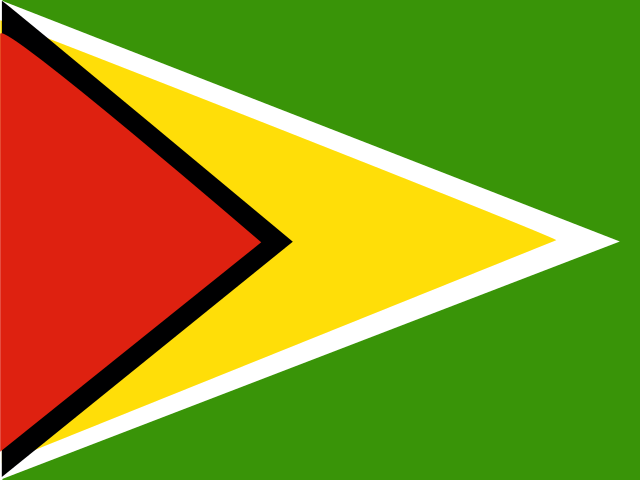
Location
Guyana is in Northern South America, bordering the North Atlantic Ocean, between Suriname and Venezuela. It shares land borders with Brazil (1,308 km), Suriname (836 km) and Venezuela (789 km) and has 459 km of coastline. The capital is Georgetown.
Guyana population 2026: 840,886 — growth, rank & history →Key Statistics for 2026
Total population
Population Change
Median age of population
Population density
Life expectancy at birth
Agricultural land
Apple Import Volume
Dam capacity per capita
Female population of reproductive age
Health Care Spending per Capita
Learning-adjusted years of school
History
Guyana's history is marked by a rich tapestry of indigenous cultures, colonial encounters, and a struggle for independence. The earliest inhabitants of the region were the Amerindian peoples, including the Arawaks and Caribs, who arrived around 3000 BCE. These groups developed complex societies, with agriculture, fishing, and trade as their mainstays. Archaeological evidence suggests that these indigenous peoples lived in harmony with the lush tropical environment, utilizing its resources for sustenance and cultural practices.
During the 16th century, European exploration began to shape the future of Guyana. The Dutch were the first to establish settlements in the early 1600s, primarily for trade and sugar production. The region changed hands multiple times among the Dutch, British, and French throughout the 17th and 18th centuries. The British eventually gained control in 1814, solidifying their presence with the establishment of British Guiana. This era saw the introduction of African slaves to work on sugar plantations, significantly impacting the demographic landscape and contributing to the complexities of ethnic relations that would define the nation’s future.
Guyana achieved significant milestones in its modern history, particularly in the 20th century. The rise of nationalist movements in the 1950s, led by figures such as Cheddi Jagan and Forbes Burnham, culminated in the country gaining independence from British rule on May 26, 1966. The post-independence period was marked by political turbulence, economic challenges, and social strife, as the nation grappled with its colonial legacy and the diversity of its population. Guyana became a republic in 1970, further shaping its identity on the world stage.
In recent years, Guyana's historical significance has been underscored by its emerging role in global geopolitics, particularly due to the discovery of vast oil reserves in the Stabroek Block in 2015. This development has sparked discussions regarding economic growth, environmental sustainability, and governance. As Guyana navigates this new chapter, its history of colonialism, indigenous rights, and socio-political struggles continues to influence its path forward, making it a focal point for both regional and international attention.
Geography
Guyana is located on the northeastern coast of South America, bordered by Venezuela to the west, Brazil to the south, and Suriname to the east. The northern boundary of the country is the Atlantic Ocean, which provides it with a coastline of approximately 459 kilometers (285 miles). The country’s geographical position places it within the Guiana Shield, a significant geological formation that is part of the larger Amazon Basin. This strategic location not only influences its biodiversity but also its climatic conditions.
The physical landscape of Guyana is characterized by a combination of low coastal plains, extensive rainforests, and a few mountain ranges. The country is predominantly flat, with elevations rarely exceeding 200 meters (656 feet). The most prominent geographical feature is the Pakaraima Mountains, which are located in the southwestern region and include the highest point in Guyana, Mount Roraima, reaching an elevation of 2,810 meters (9,219 feet). Guyana is also home to numerous rivers, including the Essequibo, which is the largest river in the country, and the Demerara and Berbice rivers. These waterways are vital for transportation and play a crucial role in the ecosystem.
Guyana experiences a tropical rainforest climate, characterized by high temperatures and significant rainfall throughout the year. The average temperature ranges from 25°C to 30°C (77°F to 86°F), with the wet season occurring from May to August and a secondary peak in rainfall from November to January. Humidity levels are consistently high, often exceeding 85%. The country is subject to seasonal flooding, particularly in coastal regions, which can impact agriculture and infrastructure. The unique climate fosters a rich diversity of flora and fauna, making Guyana a hotspot for biodiversity.
Guyana is rich in natural resources, including significant reserves of bauxite, gold, and diamonds, which contribute to its economy. Additionally, the country possesses vast tracts of pristine rainforest, which are crucial for carbon sequestration and biodiversity conservation. However, environmental challenges such as deforestation and mining-related pollution pose risks to these valuable ecosystems. The government and various organizations are increasingly focusing on sustainable development practices to balance economic growth with environmental protection, highlighting the importance of preserving Guyana's natural heritage.
Government
Guyana operates as a democratic republic, characterized by a multi-party system where the President serves as both the head of state and the head of government. The political framework is primarily established by the Constitution of 1980, which provides for the separation of powers among the executive, legislative, and judicial branches. The country’s governance is shaped by its political history and the influences of various political parties, with the two dominant parties being the People’s Progressive Party (PPP) and the People's National Congress (PNC).
The structure of government in Guyana consists of an executive branch led by the President, who is elected by popular vote for a five-year term. The President appoints a Cabinet of Ministers, who are responsible for various government departments. The legislative branch, known as the National Assembly, comprises 65 members elected every five years through a proportional representation system, which allows for a broader representation of political parties. The judicial branch is independent, with the Supreme Court serving as the highest court in the land, ensuring the rule of law and the protection of citizens' rights.
Key institutions within Guyana's government include the Office of the President, the National Assembly, and the Judiciary. The current President, elected in 2020, leads the executive branch and is supported by a diverse Cabinet that reflects the country’s political diversity. The political landscape has been marked by a history of ethnic divisions, with political parties often aligning along ethnic lines, primarily between the Indo-Guyanese and Afro-Guyanese communities. This dichotomy influences electoral outcomes and policy-making, often leading to polarized political environments.
Guyana's electoral system employs a proportional representation model, allowing voters to select a party rather than individual candidates. This system aims to ensure that the composition of the National Assembly reflects the preferences of the electorate. Elections are overseen by the Guyana Elections Commission, an independent body responsible for organizing and conducting free and fair elections. The political landscape of Guyana is dynamic, with recent developments reflecting shifts in voter sentiment, particularly regarding issues such as governance, economic development, and social justice.
Economy
Guyana operates a mixed economic system characterized by both public and private sector participation. As of 2023, the country's Gross Domestic Product (GDP) is approximately $11 billion, with a significant portion driven by its natural resources. The economy is undergoing a transformative phase, particularly following the discovery of substantial offshore oil reserves, which have positioned Guyana as one of the fastest-growing economies in the world. The International Monetary Fund (IMF) projects that Guyana's GDP growth rate could exceed 30% in the coming years, driven predominantly by the oil and gas sector.
The major industries in Guyana include agriculture, mining, and forestry, alongside the emerging oil and gas sector. Agriculture remains a cornerstone of the economy, contributing to both domestic food security and export revenues, with products like rice and sugar being significant. The mining sector, particularly bauxite and gold production, also plays a critical role, contributing to export earnings and employment. In recent years, the oil industry has rapidly ascended, attracting foreign investment and promising to reshape the country's economic landscape significantly.
Guyana's trade relationships are primarily focused on regional and international partners, with the United States, Canada, and the European Union being key markets for its exports. The country exports a range of goods, with gold, bauxite, and agricultural products forming the backbone of its trade portfolio. Imports primarily consist of machinery, food products, and manufactured goods, leading to a trade balance that is increasingly influenced by the burgeoning oil sector. As oil production ramps up, Guyana is expected to enhance its export capabilities, leading to improved trade relations and economic leverage.
Despite its promising economic outlook, Guyana faces several challenges, including infrastructure deficits, reliance on a narrow range of exports, and the potential for economic volatility linked to oil prices. Additionally, the government must navigate the complexities of managing newfound wealth to ensure sustainable development and equitable distribution of resources. However, opportunities abound in diversifying the economy, investing in human capital, and fostering innovation to build a resilient economic future that can withstand global market fluctuations.
Culture
Guyana is a culturally rich nation situated on the northeastern coast of South America, characterized by a diverse tapestry of languages, religions, and ethnic groups. The official language is English, making it unique among its South American neighbors. However, various languages are spoken throughout the country, including Creole languages such as Guyanese Creole and indigenous languages like Arawak and Carib. The population is an amalgamation of ethnicities, predominantly comprising Indo-Guyanese (approximately 40%), Afro-Guyanese (approximately 30%), and smaller communities of Amerindians, Chinese, and Portuguese. This diversity is reflected in the country's religious practices, with Hinduism and Christianity being the two most prominent faiths, alongside Islam and indigenous spiritual beliefs.
Guyana's cultural traditions and customs are deeply rooted in its ethnic diversity, often celebrated through vibrant festivals and communal gatherings. Notable events include Phagwah (Holi), celebrated by the Indo-Guyanese community, and Mashramani, a festival commemorating the country's Republic Day. These festivals feature traditional dances, music, and elaborate costumes, showcasing the rich cultural narratives and historical legacies of each group. Additionally, the practice of storytelling, especially among the Amerindian communities, plays a significant role in preserving their cultural heritage, often passed down through generations.
The arts in Guyana are a vibrant reflection of its multicultural society, encompassing a wide range of music, dance, and literature. The country's music is heavily influenced by African, Indian, and Amerindian rhythms, with genres such as calypso, soca, and chutney gaining popularity. Local literature often addresses themes of identity, migration, and social issues, with notable authors like Edgar Mittelholzer and Wilson Harris making significant contributions to Caribbean literature. Visual arts also thrive in Guyana, with artists drawing inspiration from the country's natural beauty and cultural narratives, often showcased in local galleries and exhibitions.
Cuisine in Guyana is a delightful fusion of flavors influenced by its diverse ethnic groups, characterized by the use of fresh, local ingredients. Popular dishes include pepperpot, a spiced meat stew often served during Christmas, and roti, a type of flatbread commonly enjoyed with curry. Daily life in Guyana is marked by a strong sense of community, with family gatherings and communal meals playing an essential role in social interactions. The blend of cultural practices, culinary delights, and artistic expressions makes Guyana a unique destination, rich in history and cultural significance.
About This Data
This page displays comprehensive statistical data for Guyana for the year 2026. All data points are sourced from authoritative international organizations and are regularly updated to ensure accuracy and reliability.
Click on any statistic to explore more detailed information, see how Guyana compares with other countries, and view historical trends.
Primary Data Sources
CIA World Factbook
Comprehensive country profiles and demographic statistics from the Central Intelligence Agency
Learn moreUnited Nations Statistics
Global demographic data and population projections from UN agencies and research divisions
Learn moreWorld Bank Open Data
Development indicators and comprehensive population metrics from the World Bank database
Learn moreCompare Guyana with other countries
Side-by-side comparisons across population, GDP, geography, and more.
Frequently Asked Questions About Guyana
Which continent is Guyana in?▾
Guyana is in South America.
What is the population of Guyana in 2026?▾
The population of Guyana in 2026 is approximately 840,886 persons.
What is the GDP of Guyana in 2026?▾
The GDP of Guyana in 2026 is 32,866,463,309.35 US dollars.
What is the official language of Guyana?▾
The official language of Guyana is English.
What is the life expectancy in Guyana in 2026?▾
The life expectancy at birth in Guyana in 2026 is approximately 76.66 years.
What is the capital city of Guyana?▾
The capital city of Guyana is Georgetown.
What is the population density of Guyana in 2026?▾
The population density of Guyana in 2026 is approximately 4.27 persons per square kilometer.