
El Salvador Diabetes Prevalence (% of Population) 2024: 12.70
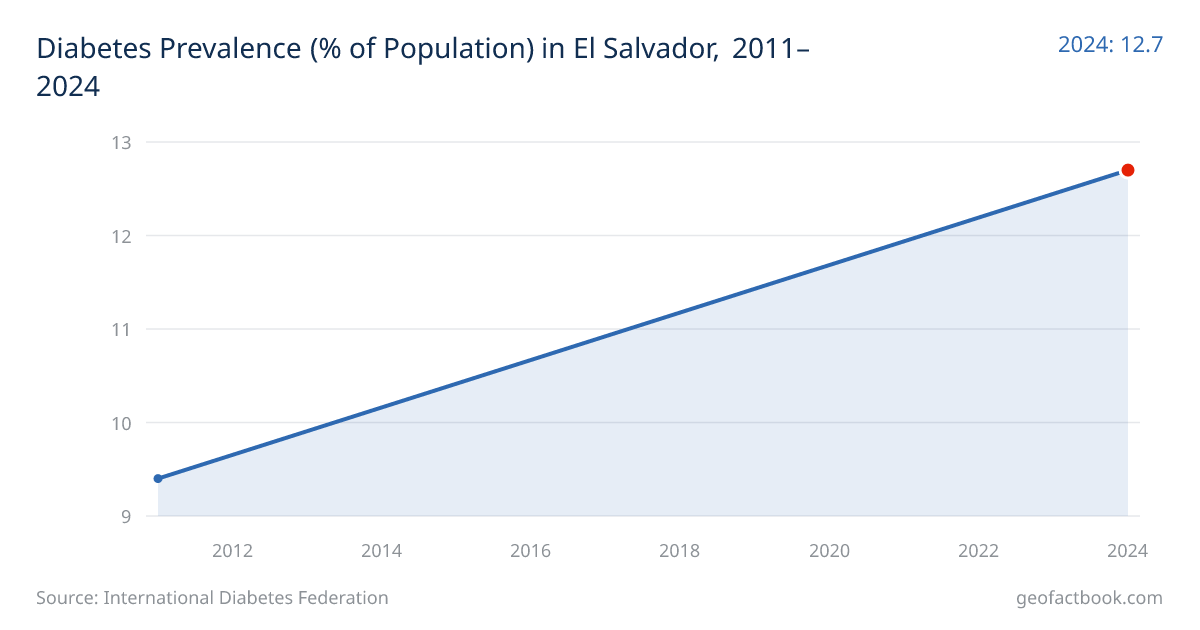
El Salvador's diabetes prevalence (% of population) in 2024 is 12.70, up 35.1% from 2011. It ranks #49 of 208 countries.
Diabetes prevalence measures the percentage of adults aged 20 to 79 affected. Explore country comparisons, rankings, and interactive maps.
Where El Salvador ranks (2024)
#49 of 208- #45
 Guatemala13.2
- #48
 Dominica12.9
- #49
 El Salvador12.7
- #50
 Jamaica12.5
- #51
 Trinidad and Tobago12.4
Diabetes Prevalence (% of Population) over time
| Year | Value | Change | % Change | Actions |
|---|---|---|---|---|
| 2024 | 12.7 | +3.3 | +35.11% | |
| 2011 | 9.4 | — | — |
Diabetes Prevalence (% of Population) in El Salvador, 2011–2024: chart
Cite this page
Geo Factbook. (n.d.). El Salvador: Diabetes Prevalence (% of Population). Retrieved November 28, 2026, from https://geofactbook.com/countries/el-salvador/diabetes-prevalence
The figures on this page come from International Diabetes Federation. For academic work, cite the original source as well.
Frequently Asked Questions About El Salvador Diabetes Prevalence (% of Population)
What is El Salvador's diabetes prevalence (% of population) in 2024?▾
El Salvador's diabetes prevalence (% of population) is 12.70 in 2024, according to International Diabetes Federation.
Is El Salvador's diabetes prevalence (% of population) increasing or decreasing?▾
El Salvador's diabetes prevalence (% of population) rose by 35.1% from 2011 (9.40) to 2024 (12.70).
How does El Salvador rank for diabetes prevalence (% of population)?▾
In 2024, El Salvador has the 49th highest diabetes prevalence (% of population) out of 208 countries with data.
What was El Salvador's diabetes prevalence (% of population) in 2011?▾
In 2011, El Salvador's diabetes prevalence (% of population) was 9.40. By 2024 it rose by 35.1%.
Explore additional statistical insights
Fruit Consumption Per Capita in El Salvador
Fruit consumption per capita measures the average fruit intake per person annually, reflecting dietary habits.
Government Health Expenditure Per Capita in El Salvador
Government health expenditure per capita measures the average spending on health services per person in a country.
Highest Male Life Expectancy in El Salvador
Discover countries where males live the longest, with life expectancy surpassing global averages significantly.
Diabetes Deaths Per 100,000 (Age-Std) in El Salvador
Diabetes deaths per 100,000 people reveal health trends. Compare countries and explore interactive maps for deeper insights.
Mean Age at First Birth in El Salvador
Mean age at first birth indicates maternal age trends. Compare countries, explore rankings, and see historical shifts with interactive maps.
Women Tobacco Use by Age Group in El Salvador
Women tobacco use by age group; compare age-specific smoking and tobacco habits among females globally.