
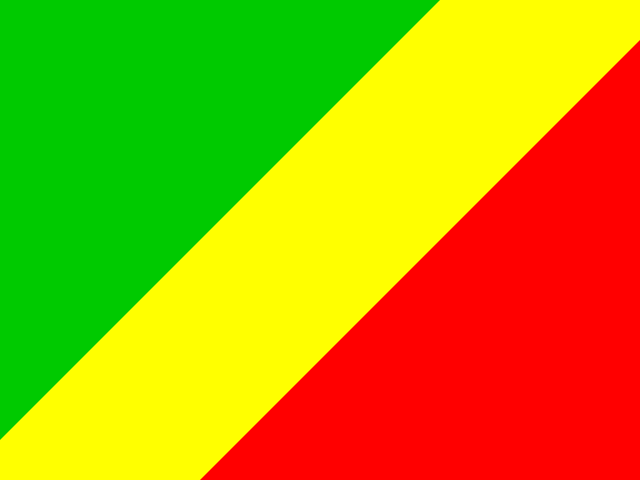
Location
Congo is in Central Africa, bordering the South Atlantic Ocean, between Angola and Gabon. It shares land borders with Gabon (2,567 km), Democratic Republic of the Congo (1,775 km), Cameroon (494 km), Central African Republic (487 km) and Angola (231 km) and has 169 km of coastline. The capital is Brazzaville.
Congo population 2026: 6.64 Million — growth, rank & history →Key Statistics for 2026
Total population
Population Change
Median age of population
Population density
Life expectancy at birth
Agricultural land
Dam capacity per capita
Female population of reproductive age
Health Care Spending per Capita
Learning-adjusted years of school
Length of paid parental leave for mother
History
The history of the Congo region is rich and complex, encompassing a variety of cultures and significant developments over millennia. The earliest inhabitants of the area can be traced back to the prehistoric era, with archaeological evidence suggesting that human activity in the region dates back to at least 90,000 years ago. The Bantu migrations, which began around 1000 BCE, played a crucial role in shaping the demographic and cultural landscape of the Congo. By the 14th century, various kingdoms, such as the Kingdom of Kongo, had emerged, characterized by sophisticated political systems, trade networks, and cultural achievements.
During the medieval period, the Kingdom of Kongo flourished from the late 14th century to the 19th century, becoming a significant regional power. It established trade relationships with European nations, particularly the Portuguese, who arrived in the late 15th century. This period saw the spread of Christianity, as many Kongo kings converted to Catholicism, which influenced local customs and governance. However, the introduction of the transatlantic slave trade in the 16th century had devastating effects on the population and economy, leading to social upheaval and internal strife within the kingdom.
The modern history of the Congo is marked by colonialism and its aftermath. In the late 19th century, King Leopold II of Belgium claimed the Congo Free State as his personal possession, leading to brutal exploitation and atrocities against the local population. Following international outcry, the Belgian government annexed the territory in 1908, and it became known as the Belgian Congo. The mid-20th century saw a rise in nationalist movements, culminating in the Congo's independence on June 30, 1960. However, independence was followed by political instability, including the assassination of Prime Minister Patrice Lumumba and the rise of dictator Mobutu Sese Seko, who ruled for over three decades.
In recent history, the Democratic Republic of the Congo has faced significant challenges, including civil wars and ongoing conflicts exacerbated by ethnic tensions and competition for resources. The First Congo War (1996-1997) and the Second Congo War (1998-2003) involved multiple African nations and resulted in millions of deaths, making it one of the deadliest conflicts since World War II. Despite the signing of peace agreements and the establishment of a transitional government, the nation continues to grapple with political instability, humanitarian crises, and the quest for sustainable development in the wake of its tumultuous past. The legacy of colonialism and conflict remains a significant aspect of the Congo's ongoing narrative, impacting its socio-economic landscape and international relations.
Geography
The Republic of the Congo, often referred to simply as Congo, is located in Central Africa and shares borders with several countries. It is bordered by Gabon to the west, Cameroon and the Central African Republic to the north, the Democratic Republic of the Congo to the east and south, and the Atlantic Ocean to the southwest. The country covers an area of approximately 342,000 square kilometers, making it the 12th largest country in Africa. The capital city, Brazzaville, is situated along the Congo River, which serves as a natural boundary with its larger neighbor, the Democratic Republic of the Congo.
The geography of the Republic of the Congo is characterized by a diverse range of physical features. The terrain is predominantly low-lying, with extensive plateaus and a vast network of rivers, including the Congo River, which is one of the longest rivers in the world. The northern part of the country is covered by dense tropical rainforests, part of the Congo Basin, which is known for its rich biodiversity. The mountainous regions, particularly in the southeast, include the Mayombe Mountains and the Crystal Mountains, which rise to elevations over 1,000 meters. These varied landscapes contribute to the ecological richness of the region, providing habitats for numerous species.
The climate in the Republic of the Congo is classified as tropical, with distinct wet and dry seasons. The wet season typically occurs from October to May, when the country experiences heavy rainfall, particularly in the northern regions. The dry season, from June to September, is characterized by lower humidity and cooler temperatures. Average temperatures generally range from 20°C to 30°C (68°F to 86°F), with variations depending on altitude and season. The climate supports a lush vegetation cover, ranging from savannas in the south to dense forests in the north, influencing the agricultural practices and livelihoods of the local populations.
The Republic of the Congo is endowed with significant natural resources, including oil, timber, and minerals such as copper and diamonds. Oil reserves, primarily located offshore, account for a substantial portion of the country’s economy and export revenues. The forestry sector also plays a crucial role, as the extensive rainforests provide valuable timber resources. However, the country faces environmental challenges, including deforestation and the impact of climate change, which threaten its rich biodiversity and natural habitats. Conservation efforts are underway to protect the unique ecosystems and promote sustainable resource management, highlighting the importance of balancing economic development with environmental stewardship.
Government
The Republic of the Congo, commonly referred to as Congo-Brazzaville, operates under a presidential republic system characterized by a multi-party political landscape. The Constitution, adopted in 2002 and amended in subsequent years, establishes the framework for governance, emphasizing the separation of powers among the executive, legislative, and judicial branches. The political system is marked by a central role for the presidency, which holds significant authority over national affairs, including foreign policy and defense.
The structure of the Congolese government consists of three main branches: the executive, the legislative, and the judicial. The executive branch is led by the President, who is elected for a five-year term and can be re-elected. The President appoints the Prime Minister, who assists in managing the government. The legislative branch is bicameral, comprising the National Assembly and the Senate. Members of the National Assembly are elected for five years, while Senators serve for six years. The judicial system is independent, with the Constitutional Court overseeing the adherence to the Constitution and the proper functioning of the judiciary.
Key institutions within the Congolese government include the Presidency, the Prime Minister's Office, and various ministries that manage specific areas such as education, health, and finance. The current President, Denis Sassou Nguesso, has been in power since 1997, following a previous term from 1992 to 1997. His long tenure has been marked by political controversy, including allegations of authoritarianism and suppression of political opposition, thereby shaping the political climate of the nation.
The electoral system in the Republic of the Congo is characterized by a mixture of direct and representative elections. Presidential elections are held every five years, and candidates must meet certain eligibility criteria, including age and residency requirements. The political landscape is dominated by the Congolese Labour Party (PCT), led by President Sassou Nguesso, although several opposition parties exist. However, the political environment is often described as challenging for opposition, with accusations of electoral malpractices and restrictions on freedom of expression, which impact the overall democratic process in the country.
Economy
The economy of the Republic of the Congo operates as a mixed system, characterized by both state and private enterprise. As of the latest data, the country's gross domestic product (GDP) is estimated at approximately $10.4 billion, with a per capita GDP of around $2,000. The economy is heavily reliant on the oil sector, which accounts for over 60% of GDP and constitutes a significant portion of government revenue. However, the country also possesses rich natural resources including timber, minerals, and agricultural products, which play a crucial role in diversifying the economic landscape.
The major industries in the Republic of the Congo include petroleum extraction, mining, agriculture, and forestry. The oil industry not only dominates economic output but also influences employment patterns and foreign investment. Mining activities focus on minerals such as copper, gold, and diamonds, further contributing to economic growth. Agriculture remains vital for subsistence, with crops like cassava, maize, and plantains providing food security, while cash crops like cocoa and coffee are increasingly important for export markets.
In terms of trade relationships, the Republic of the Congo primarily exports crude oil, which is directed mainly towards markets in China and Europe. Other significant exports include timber and minerals. Conversely, the country imports a variety of goods, including machinery, food products, and pharmaceuticals, with major import partners being France, China, and the United States. This trade dynamic underscores the nation's dependence on oil revenues while highlighting the need for broader economic engagement with other sectors.
Despite its wealth in natural resources, the Republic of the Congo faces several economic challenges, including political instability, inadequate infrastructure, and a lack of diversification in its economic activities. Corruption and mismanagement have further hampered growth prospects. Nevertheless, opportunities exist in harnessing its vast natural resources responsibly and promoting sustainable agricultural practices. The government has initiated various reforms aimed at improving the business environment, attracting foreign investment, and enhancing economic stability, which could lead to a more resilient economy in the future.
Culture
The Republic of the Congo, often referred to simply as Congo, is a nation rich in cultural diversity, boasting over 70 different ethnic groups. The largest of these groups include the Kongo, Teke, and Mbochi, each with its own distinct traditions and languages. French is the official language, but many Congolese also speak local languages such as Lingala, Kituba, and Teke, reflecting the country's linguistic variety. Religion plays a significant role in daily life, with a majority of the population adhering to Christianity, predominantly Roman Catholicism and Protestantism. Indigenous beliefs and practices are also prevalent, often coexisting with Christian traditions, showcasing the country’s unique spiritual tapestry.
Cultural traditions in the Republic of the Congo are vibrant and varied, with customs that celebrate community and kinship. Traditional ceremonies, such as weddings and funerals, are often accompanied by elaborate rituals and communal gatherings. The culture places a strong emphasis on storytelling and oral history, where elders pass down knowledge and traditions through generations. Festivals, like the annual Nguya festival, highlight the importance of agriculture and community unity, featuring traditional dances, music, and communal feasting, which are integral to Congolese social life.
The arts in the Republic of the Congo are deeply intertwined with its cultural identity. Music and dance are central to Congolese heritage, with genres like soukous and rumba gaining international acclaim. Traditional instruments, such as the likembe (thumb piano) and ngoma (drum), play a vital role in both ceremonial and recreational music, while contemporary artists continue to innovate and blend genres. Literature, though less globally recognized, is marked by a rich tradition of oral poetry and storytelling, with authors like Alain Mabanckou gaining prominence for their contributions to Francophone literature.
Cuisine in the Republic of the Congo reflects the country's agricultural abundance and cultural influences. Staples such as cassava, plantains, and rice are commonly consumed, often accompanied by rich stews made from fish or meat, seasoned with local herbs and spices. The daily life of Congolese people is characterized by a strong sense of community, with social interactions often revolving around shared meals and communal activities. Traditional markets are vibrant hubs where people gather to buy fresh produce, textiles, and handmade goods, embodying the spirit of Congolese hospitality and resourcefulness.
About This Data
This page displays comprehensive statistical data for Congo for the year 2026. All data points are sourced from authoritative international organizations and are regularly updated to ensure accuracy and reliability.
Click on any statistic to explore more detailed information, see how Congo compares with other countries, and view historical trends.
Primary Data Sources
CIA World Factbook
Comprehensive country profiles and demographic statistics from the Central Intelligence Agency
Learn moreUnited Nations Statistics
Global demographic data and population projections from UN agencies and research divisions
Learn moreWorld Bank Open Data
Development indicators and comprehensive population metrics from the World Bank database
Learn moreCompare Congo with other countries
Side-by-side comparisons across population, GDP, geography, and more.
Frequently Asked Questions About Congo
Which continent is Congo in?▾
Congo is in Africa, in the Middle Africa subregion according to the UN geoscheme.
What is the population of Congo in 2026?▾
The population of Congo in 2026 is 6,635,913 persons.
What is the GDP of Congo in 2026?▾
The GDP of Congo in 2026 is 18,229,675,080.51 US dollars.
What is the life expectancy in Congo?▾
The life expectancy at birth in Congo is 68.74 years.
What is the total fertility rate in Congo?▾
The total fertility rate in Congo is 3.99 children per woman.
What percentage of Congo's population lives in urban areas?▾
91.92% of Congo's population lives in urban areas.
What is the Human Capital Index of Congo?▾
The Human Capital Index of Congo is 0.4257.