
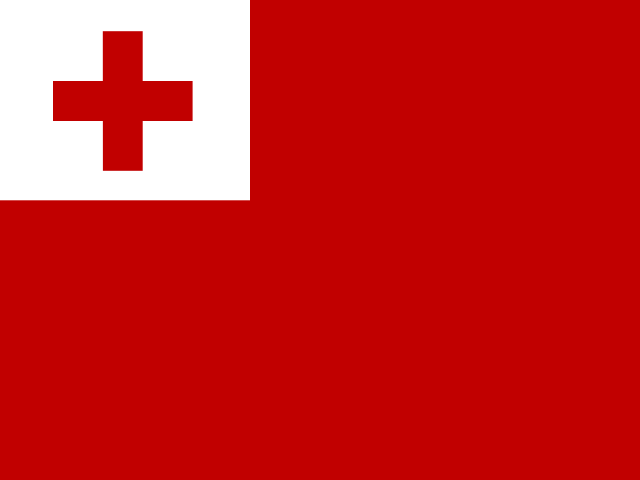
Location
Tonga is in Oceania, archipelago in the South Pacific Ocean, about two-thirds of the way from Hawaii to New Zealand. It has no land borders and has 419 km of coastline. The capital is Nuku'alofa.
Tonga population 2026: 103,309 — growth, rank & history →Key Statistics for 2026
Total population
Population Change
Median age of population
Population density
Life expectancy at birth
Agricultural land
Female population of reproductive age
Health Care Spending per Capita
Learning-adjusted years of school
Length of paid parental leave for mother
Percentage of population by degree of urbanization
History
The history of Tonga is rich and deeply intertwined with the broader narrative of Polynesian exploration and settlement. The ancient history of Tonga dates back over 3,000 years, with the earliest settlers believed to have arrived from Southeast Asia. Archaeological evidence suggests that the islands were populated by the Lapita people, known for their distinctive pottery and seafaring skills. This early migration laid the foundation for Tongan culture, which is characterized by a strong emphasis on kinship, social hierarchy, and communal values. The islands were originally organized into chiefdoms, with a sophisticated system of governance that played a crucial role in the development of Tongan society.
During the medieval period, approximately between the 10th and 16th centuries, Tonga emerged as a significant power in the Pacific. This era is marked by the rise of the Tuʻi Tonga, the divine kings who unified various islands under their rule. The Tuʻi Tonga dynasty established a complex political system that facilitated trade and cultural exchange not only among the islands of Tonga but also with other regions of Polynesia. The construction of large stone structures, or "haʻamo," serves as a testament to the advanced engineering and architectural capabilities of Tongan society during this time. Additionally, inter-island relationships and alliances were solidified through both trade and intermarriage, enhancing the island's influence across the Pacific.
The modern history of Tonga began to take shape in the 19th century when European explorers and missionaries arrived, significantly impacting Tongan society and culture. The introduction of Christianity in the 1830s led to a profound transformation, as many Tongans converted to the new faith, altering traditional practices and beliefs. In 1875, Tonga became a constitutional monarchy under the leadership of King Tāufaʻāhau Tupou I, establishing a political framework that endures today. The island nation successfully navigated colonial pressures, maintaining its sovereignty while engaging in diplomatic relations with Western powers, particularly during the late 19th century.
In recent history, Tonga has experienced both challenges and achievements that have shaped its national identity. The country faced significant natural disasters, including cyclones and volcanic eruptions, which have tested its resilience and recovery efforts. Notably, the eruption of Hunga Tonga-Hunga Haʻapai in January 2022 had a devastating impact, prompting international aid and support for recovery initiatives. Additionally, Tonga's participation in global forums, such as the United Nations and the Pacific Islands Forum, underscores its commitment to addressing climate change and sustainable development. As Tonga continues to navigate the complexities of modern governance and environmental challenges, its historical legacy remains a vital aspect of its national narrative.
Geography
Tonga is an archipelago located in the South Pacific Ocean, situated approximately one-third of the way between New Zealand and Hawaii. It consists of 176 islands, with 36 of them inhabited. The country is divided into three main island groups: the Niuas in the north, the Vavaʻu group in the central region, and the Haʻapai group in the south, along with the largest island, Tongatapu, where the capital city of Nukuʻalofa is located. Tonga does not share land borders with any other country, but it is surrounded by the vast Pacific Ocean, which plays a crucial role in its maritime connectivity and cultural heritage.
The physical features of Tonga are marked by a combination of volcanic and coral islands. The islands are predominantly hilly, with the highest point being Mount Talau on Tongatapu, reaching an elevation of 1,030 meters (3,379 feet). The terrain varies significantly across the islands, with lush tropical vegetation, sandy beaches, and coral reefs prevalent. While there are no major rivers, the islands feature numerous small streams and lagoons that contribute to their unique ecosystems. The coral reefs surrounding the islands provide important habitats for marine life, making Tonga a notable location for biodiversity.
Tonga experiences a tropical maritime climate, characterized by warm temperatures and distinct wet and dry seasons. The average temperature ranges from 20°C to 30°C (68°F to 86°F) year-round, with the wet season occurring from November to April. During this period, the islands are susceptible to tropical cyclones, which can lead to heavy rainfall and strong winds. Conversely, the dry season lasts from May to October, offering cooler and more stable weather conditions. The climate significantly influences agricultural practices and the lifestyle of the Tongan people, who rely heavily on subsistence farming and fishing.
The natural resources of Tonga are limited but include rich marine resources, agricultural products, and some mineral deposits. The islands are known for their fisheries, which support both local consumption and export opportunities. The primary agricultural products include taro, yams, and coconuts, which are integral to the Tongan diet and economy. Environmental characteristics such as coral reefs and tropical forests contribute to the country’s biodiversity and ecological health. However, Tonga faces environmental challenges, including climate change, which poses risks such as rising sea levels and increased frequency of extreme weather events, impacting both its natural resources and the livelihoods of its inhabitants.
Government
The Kingdom of Tonga operates under a constitutional monarchy that blends traditional authority with modern governance. The political system is characterized by a unique combination of hereditary rule and democratic elements. The reigning monarch, currently King Tupou VI, serves as the head of state, while the Prime Minister acts as the head of government. This system allows for a degree of political representation, with the Prime Minister and cabinet responsible for day-to-day governance, in a framework that respects Tonga's cultural heritage and traditions.
The structure of government in Tonga is divided into three branches: the executive, legislative, and judicial. The executive branch is led by the Prime Minister, who is appointed by the monarch and is typically the leader of the majority party in the Legislative Assembly. The Legislative Assembly consists of 26 members—17 elected representatives and 9 appointed by the king, reflecting both democratic choice and royal influence. The judicial branch operates independently and is responsible for upholding the rule of law, with the Supreme Court at its apex. This tripartite system aims to balance traditional authority with contemporary governance practices.
Key institutions in Tonga's governance include the Office of the Prime Minister, which coordinates government operations, and the Legislative Assembly, which is crucial for law-making and representation. The monarchy remains a significant force in politics, with the king possessing considerable powers, including the appointment of judges and the ability to dissolve the parliament. This blend of institutions fosters a political landscape that is both dynamic and deeply rooted in Tongan customs.
The electoral system in Tonga is semi-democratic, with general elections held every four years to select the elected representatives of the Legislative Assembly. The political landscape is characterized by a mix of traditional loyalties and modern political parties, with recent years seeing a gradual shift towards greater democratic participation. While political parties are not as formally established as in many other nations, various factions and independent candidates play a significant role in the electoral process. This evolving political scene reflects Tonga's ongoing journey towards balancing its cultural heritage with the demands of contemporary governance.
Economy
The economy of Tonga is characterized as a small, open economy that relies heavily on agriculture, tourism, and remittances from Tongan expatriates living abroad. As of 2023, Tonga's nominal Gross Domestic Product (GDP) is estimated to be approximately $508 million, with a GDP per capita of around $4,600, reflecting a modest economic output in comparison to larger nations. The economic system is primarily based on subsistence agriculture, which accounts for a significant portion of employment, while the service sector, particularly tourism, plays a crucial role in generating revenue and foreign exchange.
Agriculture remains a vital component of the Tongan economy, with key products including root crops, fruits, and coconuts. The fishing industry, particularly tuna fishing, also contributes significantly to both domestic consumption and exports. In addition, tourism is a major industry, drawing visitors to its pristine beaches, cultural heritage, and unique biodiversity. The sector is a key driver of economic growth, with a pre-COVID-19 pandemic influx of over 100,000 tourists annually. Other industries such as handicrafts and small-scale manufacturing also exist but play a lesser role in overall economic activity.
Tonga's trade relationships are primarily centered around its Pacific neighbors, as well as Australia and New Zealand, which are significant sources of imports and markets for exports. Key exports include agricultural products, fish, and handicrafts, while imports mainly consist of machinery, fuel, and food products. The trade balance, however, typically shows a deficit, reflecting the country's reliance on imports for goods and services. Remittances from Tongans living abroad represent a substantial part of the economy, accounting for approximately 30% of GDP, providing an essential financial lifeline for many families.
Despite its economic potential, Tonga faces several challenges, including vulnerability to natural disasters, climate change, and economic shocks. The reliance on a narrow range of industries, particularly tourism, makes the economy susceptible to fluctuations in global demand and external shocks, such as pandemics or natural disasters. Opportunities for economic diversification exist, particularly in sustainable tourism, renewable energy, and enhanced agricultural practices. Effective investment in infrastructure and education can also help foster economic resilience and growth, ensuring a more sustainable economic future for Tonga.
Culture
The Kingdom of Tonga is a Polynesian nation characterized by its rich cultural tapestry, which is woven from its languages, religions, and ethnic groups. The official languages are Tongan and English, with Tongan being widely spoken and serving as a vital component of national identity. The population is predominantly Tongan, with a small percentage of other ethnic groups, including Europeans and Chinese. In terms of religion, approximately 98% of Tongans are Christians, with the Free Wesleyan Church being the largest denomination. This strong religious influence permeates daily life and is reflected in various cultural practices and community events.
Tongan culture is deeply rooted in traditional customs and societal values, emphasizing community, respect, and family ties. One of the most significant cultural traditions is the ta'ovala, a traditional mat worn around the waist, which symbolizes respect and is commonly worn during formal gatherings. The concept of fa’a Tonga embodies the Tongan way of life, emphasizing the importance of maintaining cultural practices while adapting to modern influences. Festivals, such as the annual Heilala Festival, celebrate Tongan heritage through traditional dances, songs, and storytelling, showcasing the nation’s vibrant cultural legacy.
Art, music, and literature play a pivotal role in Tongan culture, with traditional forms of expression reflecting the country's history and values. Tongan music is characterized by its harmonious vocal arrangements and the use of traditional instruments like the ukulele and pahu (drum). The art of tattooing, known as tatatau, is also significant, often symbolizing social status and personal achievements. In literature, oral traditions are vital, with storytelling serving as a means of preserving history and educating younger generations about their ancestry and moral values.
Tongan cuisine is an integral part of daily life, featuring a blend of fresh seafood, tropical fruits, and root vegetables. Common dishes include ota ika (raw fish salad) and lu sipi (lamb wrapped in taro leaves), often enjoyed during communal feasts known as umu. Daily life in Tonga revolves around family and community gatherings, where meals are shared, and customs are observed. This communal lifestyle fosters strong bonds and a sense of belonging, encapsulating the essence of Tongan identity amidst a backdrop of changing global influences.
About This Data
This page displays comprehensive statistical data for Tonga for the year 2026. All data points are sourced from authoritative international organizations and are regularly updated to ensure accuracy and reliability.
Click on any statistic to explore more detailed information, see how Tonga compares with other countries, and view historical trends.
Primary Data Sources
CIA World Factbook
Comprehensive country profiles and demographic statistics from the Central Intelligence Agency
Learn moreUnited Nations Statistics
Global demographic data and population projections from UN agencies and research divisions
Learn moreWorld Bank Open Data
Development indicators and comprehensive population metrics from the World Bank database
Learn moreCompare Tonga with other countries
Side-by-side comparisons across population, GDP, geography, and more.
Frequently Asked Questions About Tonga
Which continent is Tonga in?▾
Tonga is in Oceania, in the Polynesia subregion according to the UN geoscheme.