
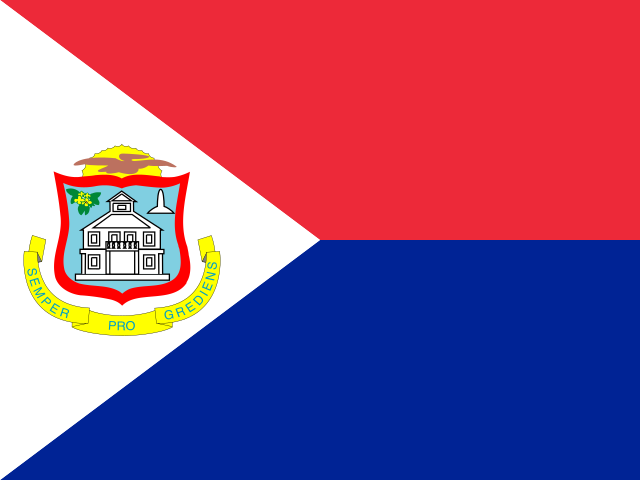
Location
Sint Maarten (Dutch part) is in the Caribbean, located in the Leeward Islands (northern) group. It shares land borders with Saint Martin (France) (16 km) and has 59 km of coastline. The capital is Philipsburg.
Sint Maarten (Dutch part) population 2026: 44,496 — growth, rank & history →Key Statistics for 2026
Total population
Population Change
Median age of population
Population density
Life expectancy at birth
Female population of reproductive age
Percentage of population by degree of urbanization
Population living in slums
Protected Land Area for Adaptation
Total deaths
Total fertility rate
History
The history of Sint Maarten, particularly the Dutch part, is a tapestry woven from the threads of indigenous cultures, colonial ambitions, and geopolitical shifts. The island was originally inhabited by the Arawak and later by the Carib peoples, who arrived around the 1200s. These early inhabitants lived off the land and sea, developing a rich culture that included fishing, agriculture, and craftsmanship. The island was named by Christopher Columbus in 1493 during his voyages in the Caribbean, although he did not settle there. This marked the beginning of European interest in the island, which would lead to significant changes in its demographic and cultural landscape.
During the medieval period, Sint Maarten saw the arrival of European powers, particularly the Spanish and the French, but it was the Dutch who established a more permanent presence. In 1631, the Dutch West India Company claimed the island, primarily for its strategic location along the trade routes. The Dutch established settlements and began cultivating tobacco and sugarcane, which would become central to the island's economy. By the late 17th century, Sint Maarten was contested territory due to its valuable resources, leading to skirmishes between the Dutch, French, and British. In 1648, a treaty was signed between the Dutch and French, effectively dividing the island into two distinct territories, a division that persists to this day.
The modern history of Sint Maarten is marked by its transition from a colonial outpost to a self-governing territory. Following the abolition of slavery in 1863, the island began to modernize, with developments in infrastructure and tourism. In the 20th century, particularly after World War II, Sint Maarten's economy shifted towards tourism, becoming a popular destination for cruise ships and vacationers. The island was officially designated as a separate part of the Netherlands Antilles in 1954, and in 2010, following the dissolution of the Netherlands Antilles, Sint Maarten became a country within the Kingdom of the Netherlands, gaining a degree of autonomy over its local affairs while the Dutch government retained responsibility for defense and foreign policy.
In recent years, Sint Maarten has faced significant challenges, notably the devastating impact of Hurricane Irma in September 2017, which caused widespread destruction across the island. This catastrophe prompted international aid and support, highlighting the island's vulnerability to climate change and natural disasters. The reconstruction efforts have since reshaped the island's infrastructure and economy, with a renewed focus on sustainable development and tourism resilience. Today, Sint Maarten stands as a unique cultural blend of Dutch and Caribbean influences, reflecting its complex history and ongoing evolution.
Geography
Sint Maarten, the Dutch part of the island of Saint Martin, is located in the northeastern Caribbean, lying approximately 240 kilometers (150 miles) east of Puerto Rico. The island is divided between two nations: the southern half is governed by the Netherlands as Sint Maarten, while the northern half belongs to France as Saint-Martin. Sint Maarten covers an area of about 34 square kilometers (13 square miles) and is bordered by the Caribbean Sea to the south and the Atlantic Ocean to the north, with a coastline characterized by stunning beaches and clear turquoise waters.
The terrain of Sint Maarten is predominantly hilly, with the highest point, Pic Paradis, reaching an elevation of 424 meters (1,391 feet) in the French part of the island. The Dutch side features a series of low hills and valleys, with a few small rivers and streams that are primarily seasonal and may dry up during the dry season. The island's landscape is a mix of coastal plains, rocky cliffs, and sandy beaches, contributing to its diverse ecosystems and picturesque scenery.
Sint Maarten experiences a tropical maritime climate, characterized by warm temperatures year-round, with average highs around 28°C to 32°C (82°F to 90°F) and lows averaging between 22°C to 26°C (72°F to 79°F). The island receives most of its rainfall between May and November, coinciding with the hurricane season, which can bring heavy storms and gusty winds. The dry season, from December to April, offers more stable weather conditions, making it a popular time for tourism.
In terms of natural resources, Sint Maarten relies heavily on tourism, which is its primary economic driver. The island possesses limited natural resources, with few agricultural products due to its small land area and rocky soil. However, it does have a vibrant marine ecosystem, including coral reefs and diverse marine life, which are critical for both environmental health and the tourism industry. Environmental concerns, such as coastal erosion and pollution, are increasingly important as the island navigates the balance between development and conservation.
Government
Sint Maarten, the Dutch part of the island shared with the French collectivity of Saint-Martin, operates as a parliamentary democracy within the Kingdom of the Netherlands. Its political system is characterized by a constitutional framework that allows for a high degree of autonomy, although the Kingdom retains responsibility for defense and foreign affairs. The government is structured into three branches: the executive, led by the Prime Minister; the legislative, comprising the Parliament of Sint Maarten; and the judicial, which ensures the rule of law through an independent court system.
The executive branch is headed by the Prime Minister, who is appointed by the Governor of Sint Maarten, representing the Dutch monarch. The Prime Minister selects ministers to form the Council of Ministers, which is responsible for day-to-day governance. The legislative branch consists of a unicameral Parliament with 15 members elected for a four-year term through a proportional representation system. This allows for a diverse political landscape where multiple parties can gain representation. The judicial branch is independent and operates under the Dutch legal system, with the Court of First Instance and the Court of Appeals ensuring justice is upheld.
Key institutions include the Parliament of Sint Maarten, which plays a significant role in shaping laws and policies, and the Council of Ministers, which implements these laws. Political leadership is characterized by a coalition model, where parties must collaborate to form a government, reflecting the varied interests of the electorate. Notably, the political landscape is dynamic, with several parties representing different ideologies, including the United People's Party (UPP) and the National Alliance (NA), among others.
The electoral system in Sint Maarten is based on proportional representation, allowing citizens to elect their representatives in a manner that reflects the overall distribution of votes. This system encourages a participatory political environment, where smaller parties can also gain a foothold in Parliament. As a result, the political climate is often marked by coalition governments, which can lead to both innovative governance and challenges in achieving consensus on key issues. Overall, Sint Maarten's government structure and political system are designed to promote democratic principles while navigating the complexities of its unique geopolitical status.
Economy
Sint Maarten, the Dutch part of the island shared with the French collectivity of Saint-Martin, operates a mixed economic system primarily driven by tourism. As of recent estimates, the Gross Domestic Product (GDP) of Sint Maarten is approximately $1.2 billion, indicating a relatively small yet vibrant economy. The economy is characterized by a high dependency on tourism, which contributes significantly to the national income, accounting for around 80% of the GDP. Other sectors, including retail, construction, and financial services, also play vital roles in the economic landscape.
The major industries in Sint Maarten are centered around tourism, hospitality, and real estate. The island attracts visitors with its stunning beaches, vibrant nightlife, and cultural diversity. The tourism sector not only creates job opportunities but also stimulates growth in ancillary sectors such as food and beverage, transportation, and entertainment. Furthermore, the construction industry has seen growth due to ongoing investments in infrastructure and real estate development, particularly in luxury accommodations and residential properties aimed at both tourists and expatriates.
In terms of trade relationships, Sint Maarten engages primarily in importing goods, with imports exceeding exports significantly. The country imports a variety of products, including food, fuel, and consumer goods, mainly from the United States, the Netherlands, and neighboring Caribbean nations. Conversely, the main exports include electronics and agricultural products, though the volume is relatively low compared to imports. The island's strategic location in the Caribbean facilitates its role as a regional hub for tourism and trade, enhancing its economic interactions.
Despite its economic strengths, Sint Maarten faces several challenges, including vulnerability to natural disasters, particularly hurricanes, which can severely disrupt the tourism-dependent economy. The island is still recovering from the devastation of Hurricane Irma in 2017, which caused significant damage to infrastructure and housing. However, there are also opportunities for economic diversification and resilience building, including investment in renewable energy and sustainable tourism practices. By leveraging its natural beauty and cultural heritage, Sint Maarten aims to enhance its economic stability and growth in the coming years.
Culture
Sint Maarten, the Dutch part of the island of Saint Martin, is a vibrant cultural tapestry shaped by its diverse population. The official language is Dutch, but the most widely spoken language is English, complemented by a significant number of residents who speak French, Spanish, and Papiamento. This linguistic diversity reflects the island's rich history and multiple influences, with a population consisting predominantly of Afro-Caribbean descent, alongside European and Latin American communities. In terms of religion, Christianity is the dominant faith, with the majority of the population identifying as Roman Catholic, followed by Protestant denominations and a small but notable presence of other religions, such as Rastafarianism and Hinduism.
The cultural traditions and customs of Sint Maarten are a blend of indigenous, African, European, and Caribbean influences. One of the most significant cultural celebrations is Carnival, which showcases the island's lively spirit through colorful parades, music, and dance. Celebrated annually, Carnival features local traditions, vibrant costumes, and the infectious rhythms of calypso and soca music, demonstrating the community's unity and creativity. Other important traditions include the celebration of the annual Sint Maarten Day on November 11, which commemorates the island's history and heritage with various festivities, food, and music.
The arts scene in Sint Maarten is dynamic, with a strong emphasis on music, dance, and visual arts. Local artists contribute to a rich musical landscape that includes genres such as reggae, calypso, and zouk, often performed at local festivals and events. Literature also holds a significant place in the culture, with many local authors exploring themes of identity and the Caribbean experience. The island's art galleries and cultural centers promote the works of local artists, fostering a sense of pride and community among residents.
Cuisine in Sint Maarten is another vital aspect of its culture, characterized by a fusion of Caribbean flavors and international influences. Traditional dishes often feature seafood, rice, and local vegetables, with popular meals including conch fritters, goat stew, and johnny cakes. Street food vendors and local markets are integral to daily life, offering a taste of the island's culinary delights. The island's multicultural population contributes to a diverse dining scene, where visitors can enjoy everything from fine dining to casual beachside eateries. This blend of cultures not only enriches the culinary landscape but also reflects the island's daily life, where community gatherings, music, and food play a central role in fostering connections among residents.
About This Data
This page displays comprehensive statistical data for Sint Maarten (Dutch part) for the year 2026. All data points are sourced from authoritative international organizations and are regularly updated to ensure accuracy and reliability.
Click on any statistic to explore more detailed information, see how Sint Maarten (Dutch part) compares with other countries, and view historical trends.
Primary Data Sources
CIA World Factbook
Comprehensive country profiles and demographic statistics from the Central Intelligence Agency
Learn moreUnited Nations Statistics
Global demographic data and population projections from UN agencies and research divisions
Learn moreWorld Bank Open Data
Development indicators and comprehensive population metrics from the World Bank database
Learn moreCompare Sint Maarten (Dutch part) with other countries
Side-by-side comparisons across population, GDP, geography, and more.
Frequently Asked Questions About Sint Maarten (Dutch part)
Which continent is Sint Maarten (Dutch part) in?▾
Sint Maarten (Dutch part) is in North America, in the Caribbean subregion according to the UN geoscheme.