
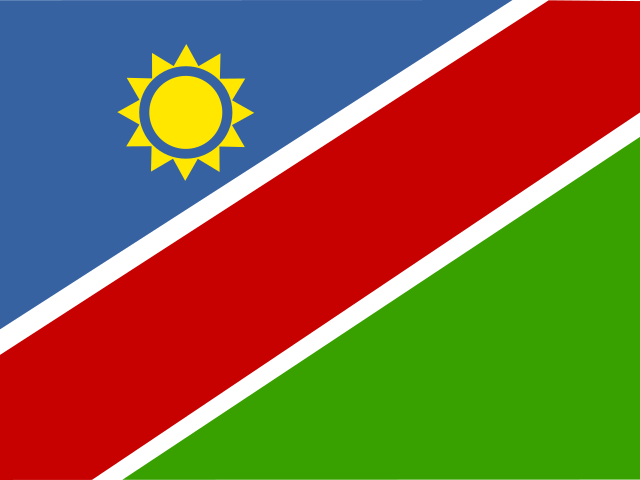
Location
Namibia is in Southern Africa, bordering the South Atlantic Ocean, between Angola and South Africa. It shares land borders with Botswana (1,544 km), Angola (1,427 km), South Africa (1,005 km) and Zambia (244 km) and has 1,572 km of coastline. The capital is Windhoek.
Namibia population 2026: 3.16 Million — growth, rank & history →Key Statistics for 2026
Total population
Population Change
Median age of population
Population density
Life expectancy at birth
Agricultural land
Apple Import Volume
Current Bank Rate
Dam capacity per capita
Female population of reproductive age
Health Care Spending per Capita
History
Namibia's history is rich and varied, tracing back to ancient times when the region was inhabited by indigenous groups such as the San and Khoikhoi peoples. Archaeological evidence suggests that these hunter-gatherer communities have lived in the area for thousands of years, with some of the earliest rock art found in the Brandberg Mountains, dating back approximately 26,000 years. The arrival of Bantu-speaking groups around the first millennium AD marked a significant shift in the demographic landscape, leading to the establishment of agricultural societies in various parts of the country.
During the medieval period, the region saw the emergence of various chiefdoms and the consolidation of power among local tribes, such as the Herero and Nama people. The early 19th century was marked by increased interaction with European explorers and traders, which introduced new goods and ideas. However, it also led to significant upheaval as local tribes faced the pressure of colonization. By the late 19th century, German colonial interests culminated in the establishment of German South West Africa, leading to violent conflicts such as the Herero and Namaqua Genocide between 1904 and 1908, which decimated these populations and greatly affected their cultural heritage.
Namibia's modern history is characterized by the struggle against colonial rule and apartheid. After World War I, the League of Nations mandated Namibia to South Africa, which implemented a system of racial segregation similar to apartheid. The South West Africa People’s Organization (SWAPO) emerged as a prominent liberation movement, leading a protracted armed struggle against South African rule. Following decades of conflict, Namibia achieved independence on March 21, 1990, becoming the last African nation to gain independence from colonial rule. Sam Nujoma, the leader of SWAPO, became the country’s first president, marking a new era in Namibian history.
In recent years, Namibia has made significant strides in establishing a stable democratic government and promoting economic development. The nation is recognized for its commitment to environmental conservation and has garnered international attention for its unique approach to wildlife management and tourism. Furthermore, Namibia's history of colonialism and independence continues to shape its identity, as the country grapples with the legacies of its past while striving to create an inclusive future for all its citizens. The significance of Namibia's historical journey is evident in its ongoing efforts to address issues of land reform and social inequality, making it a focal point for discussions on post-colonial recovery in Africa.
Geography
Namibia is located in the southern part of Africa, bordered by Angola to the north, Zambia to the northeast, Botswana to the southeast, and South Africa to the south. To the west, it has a coastline along the Atlantic Ocean, stretching approximately 1,570 kilometers. The country's geographical positioning makes it a pivotal point for trade routes in the region, while its diverse borders contribute to a blend of cultural influences and ecological systems.
The physical landscape of Namibia is characterized by its stark contrasts. The country features the Namib Desert, one of the oldest deserts in the world, which runs along the Atlantic coast and is known for its towering sand dunes, some of which reach heights of over 300 meters. The central plateau is dominated by the Khomas Highlands, where rugged mountains and valleys create a dramatic terrain. Additionally, the Zambezi River, which forms part of Namibia's northeastern border, is significant for its ecological diversity and is a vital water source for both humans and wildlife.
Namibia experiences a predominantly arid climate, with variations ranging from desert conditions in the coastal regions to semi-arid in the interior. The country has two main seasons: a hot, dry season from May to October and a rainy season from November to April, during which the majority of the annual rainfall occurs. Average temperatures can vary significantly, with the coastal areas being cooler due to the cold Benguela Current, while the interior can experience extreme heat, especially during the summer months.
Rich in natural resources, Namibia is endowed with minerals such as diamonds, uranium, and copper, which play a crucial role in its economy. The country also harbors significant wildlife and biodiversity, particularly within its national parks, such as Etosha National Park, which is renowned for its unique salt pan and diverse fauna. However, like many nations, Namibia faces environmental challenges, including desertification and the impacts of climate change, which threaten its ecosystems and natural resources.
Government
Namibia is a democratic republic, characterized by a multi-party political system. The nation’s governance is founded on a constitution adopted in 1990, which emphasizes the rule of law, the separation of powers, and the protection of human rights. The political landscape is dominated by the South West Africa People’s Organization (SWAPO), which has been the ruling party since independence. The government operates under a framework that promotes transparency and accountability, allowing for active participation from citizens in the political process.
The structure of government in Namibia consists of three distinct branches: the executive, legislative, and judicial. The executive branch is headed by the President, who is both the head of state and government, and is elected for a five-year term. The President appoints the Cabinet, which assists in the administration of government functions. The legislative branch is bicameral, comprising the National Assembly and the National Council. The National Assembly consists of 96 members, with representatives elected through a proportional representation system, while the National Council includes 26 members, elected by regional councils. The judicial branch is independent and is responsible for interpreting laws and upholding the constitution, with the Supreme Court serving as the highest court in the land.
Key institutions in Namibia's government include the Office of the President, the National Assembly, and the Supreme Court. The current President, elected in 2019, is Hage Geingob, who has played a significant role in shaping national policies and international relations. The political framework also includes various ministries and government agencies that facilitate the execution of public policies and programs aimed at national development.
Namibia employs a proportional representation electoral system, which ensures that political parties are represented in the National Assembly in proportion to the number of votes they receive. This system has been crucial in fostering a diverse political environment, although SWAPO continues to hold a significant majority. The political landscape has seen the emergence of opposition parties, such as the Popular Democratic Movement (PDM) and the Landless People’s Movement (LPM), which advocate for various social and economic issues. Overall, Namibia’s government operates within a framework that encourages democratic governance while addressing the complexities of post-colonial nation-building.
Economy
Namibia operates a mixed economy, characterized by a combination of private enterprise and government intervention. As of 2023, the country's Gross Domestic Product (GDP) is estimated at approximately $12 billion, with a per capita GDP of around $4,800. The Namibian economy has shown resilience, although it is sensitive to fluctuations in global markets, particularly in commodities. The government has pursued policies aimed at economic diversification, reducing reliance on mining, and enhancing the manufacturing sector.
The major industries in Namibia include mining, agriculture, tourism, and manufacturing. The mining sector is vital to the economy, contributing significantly to the GDP and export revenue, particularly through the extraction of minerals such as diamonds, uranium, and zinc. Agriculture, primarily subsistence farming, plays a crucial role in rural livelihoods and accounts for a sizable portion of employment, although its overall contribution to GDP is limited. Tourism has emerged as an essential industry, attracting visitors to its national parks and unique landscapes, further bolstered by the country's stable political environment and commitment to conservation.
Namibia's trade relationships are diverse, with the Southern African Customs Union (SACU) being a key economic partner, facilitating trade with neighboring countries like South Africa, Botswana, and Lesotho. The country predominantly exports minerals, fish, and agricultural products, with South Africa being the largest export destination. Conversely, Namibia imports machinery, petroleum products, and foodstuffs, with most imports also coming from South Africa. This trade dynamic underscores Namibia's integration within the regional economy while highlighting its dependence on external markets.
Despite its economic potential, Namibia faces several challenges, including high unemployment rates, income inequality, and reliance on a narrow range of exports. The country is grappling with the impacts of climate change, which threaten agricultural productivity and water resources. However, opportunities exist in renewable energy, infrastructure development, and sustainable tourism. By leveraging its natural resources and investing in human capital, Namibia can work towards achieving sustainable economic growth and addressing its socio-economic challenges.
Culture
Namibia is a culturally rich nation characterized by its diverse population, comprising various ethnic groups and languages. The largest ethnic group is the Ovambo, followed by the Kavango, Herero, and Damara, among others. Approximately 11 languages are spoken across the country, with Oshiwambo and Khoekhoe being the most widely used. English is the official language, adopted in 1990 after independence, while Afrikaans, German, and indigenous languages serve as common means of communication. In terms of religion, Namibia is predominantly Christian, with various denominations represented, including Lutheran, Roman Catholic, and Pentecostal communities, although traditional African beliefs also play a significant role in the spiritual lives of many Namibians.
The cultural traditions and customs of Namibia reflect the country's rich heritage and social diversity. Various ethnic groups observe unique rituals and festivals that celebrate their history and identity. For example, the Ovaherero and Nama people commemorate their historical struggles through the Herero Day and Namibian Independence Day, respectively. Traditional practices such as storytelling, dance, and music are integral to community life and often involve elaborate costumes and rhythmic movements that convey cultural narratives. The Himba people, known for their distinctive clothing and hairstyles, engage in traditional ceremonies that highlight their connection to nature and ancestry.
The arts scene in Namibia is vibrant, showcasing a wide spectrum of music, visual arts, and literature. Traditional music often incorporates indigenous instruments like the mbira and drums, while contemporary Namibian artists blend traditional elements with modern genres, including jazz and hip-hop. Literature in Namibia has gained recognition, with authors like Joseph Diescho and Marleny N. W. J. K. W. M. N. K. N. K. K. K. N. K. N. K. N. K. N. K. N. K. N. K. N. K. N. K. N. K. N. K. N. contributing to the country's literary landscape. The promotion of local arts is supported through festivals and exhibitions, which highlight the creativity of Namibians and encourage cultural exchange.
Namibian cuisine reflects the country's diverse cultural influences, with staple foods ranging from maize porridge and meat dishes to traditional game meat. Daily life in Namibia often revolves around communal values, where families gather for meals and cultural events. The culinary practices of different ethnic groups, such as the use of biltong (dried cured meat) and potjiekos (a slow-cooked stew), emphasize the importance of shared experiences and traditions. Overall, Namibia's culture is a tapestry woven from a rich history, diverse ethnic groups, and a commitment to preserving and celebrating its heritage.
About This Data
This page displays comprehensive statistical data for Namibia for the year 2026. All data points are sourced from authoritative international organizations and are regularly updated to ensure accuracy and reliability.
Click on any statistic to explore more detailed information, see how Namibia compares with other countries, and view historical trends.
Primary Data Sources
CIA World Factbook
Comprehensive country profiles and demographic statistics from the Central Intelligence Agency
Learn moreUnited Nations Statistics
Global demographic data and population projections from UN agencies and research divisions
Learn moreWorld Bank Open Data
Development indicators and comprehensive population metrics from the World Bank database
Learn moreCompare Namibia with other countries
Side-by-side comparisons across population, GDP, geography, and more.
Frequently Asked Questions About Namibia
Which continent is Namibia in?▾
Namibia is in Africa, in the Southern Africa subregion according to the UN geoscheme.
What is the population of Namibia in 2026?▾
The population of Namibia in 2026 is 3,155,502 persons.
What is the GDP of Namibia?▾
The Gross Domestic Product (GDP) of Namibia is $14,500,460,844.28 in current US dollars.
What is the life expectancy in Namibia?▾
The life expectancy at birth in Namibia is 74.68 years.
What is the population density of Namibia?▾
The population density of Namibia is 3.85 persons per square kilometer.
What is the total fertility rate in Namibia?▾
The total fertility rate in Namibia is 3.14 children per woman.
What percentage of Namibia's population lives in urban areas?▾
44.20% of Namibia's population lives in urban areas.