
Mali Population density 2026: 21.22 per sq. km
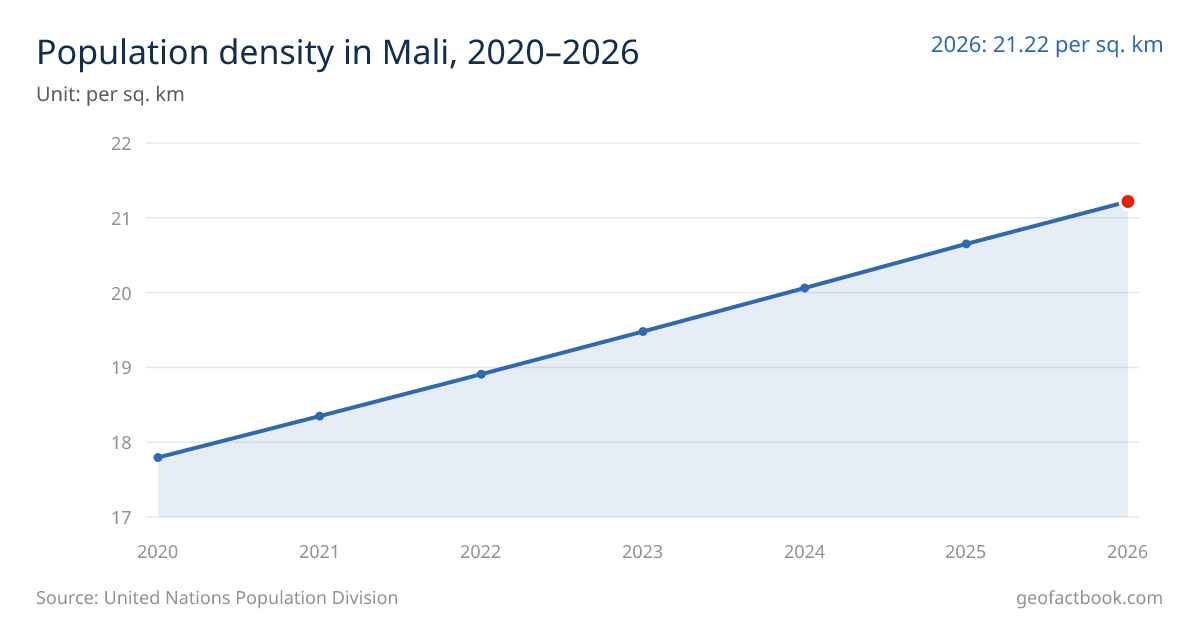
Mali's population density in 2026 is 21.22 per sq. km (estimate), up 2.7% from 2025. It ranks #200 of 236 countries.
Population density measures how many people live per square kilometer in a country, highlighting urbanization and resource distribution. Understanding this statistic is crucial for assessing living conditions, infrastructure needs, and environmental impact.
Estimated value for 2026 (interpolated, no direct source).
Where Mali ranks (2026)
#200 of 236- #198
 Niger22.7 per sq. km
- #199
 South Sudan22.28 per sq. km
- #200
 Mali21.22 per sq. km
- #201
 Bhutan20.89 per sq. km
- #202
 Algeria20.21 per sq. km
Population density over timeSome values are estimated based on historical trends
| Year | Value | Change | % Change | Actions |
|---|---|---|---|---|
| 2026 | 21.22 per sq. km | +0.57 per sq. km | +2.74% | |
| 2025 | 20.65 per sq. km | +0.59 per sq. km | +2.94% | |
| 2024 | 20.06 per sq. km | +0.58 per sq. km | +2.98% | |
| 2023 | 19.48 per sq. km | +0.57 per sq. km | +3.02% | |
| 2022 | 18.91 per sq. km | +0.56 per sq. km | +3.06% | |
| 2021 | 18.35 per sq. km | +0.55 per sq. km | +3.11% | |
| 2020 | 17.8 per sq. km | — | — |
Population density in Mali, 2020–2026: chart
Cite this page
Geo Factbook. (n.d.). Mali: Population density. Retrieved November 27, 2026, from https://geofactbook.com/countries/mali/population-density
The figures on this page come from United Nations Population Division. For academic work, cite the original source as well.
Frequently Asked Questions About Mali Population density
What is Mali's population density in 2026?▾
Mali's population density is 21.22 per sq. km in 2026 (estimate), according to United Nations Population Division.
Is Mali's population density increasing or decreasing?▾
Mali's population density rose by 2.7% from 2025 (20.65 per sq. km) to 2026 (21.22 per sq. km).
How does Mali rank for population density?▾
In 2026, Mali has the 200th highest population density out of 236 countries with data.
What was Mali's population density in 2020?▾
In 2020, Mali's population density was 17.80 per sq. km. By 2026 it rose by 19.2%.
Explore additional statistical insights
Beer Consumption per Capita in Mali
Beer consumption per capita measures the average liters of beer consumed by each person in a country annually.
Education Expenditure (% of GDP) in Mali
Education expenditure measures the percentage of GDP spent on education. Compare countries and explore interactive rankings and trends.
Length of paid parental leave for mother in Mali
Discover how the length of paid parental leave for mothers varies by country, impacting family well-being and workforce participation. Explore the statistics that highlight this critical social issue.
Mean Years of Schooling in Mali
Mean Years of Schooling indicates the average number of years of education received by people aged 25 and older.
Total net-migration in Mali
Total net-migration measures the difference between the number of immigrants and emigrants in a country, reflecting population shifts and economic opportunities. Understanding this statistic is crucial for analyzing demographic trends and policy impacts in nations worldwide.
Under-five mortality rate in Mali
The under-five mortality rate measures the number of deaths per 1,000 live births for children under five. This critical statistic highlights child health and development, reflecting a country's healthcare quality and socioeconomic conditions. Understanding these rates is vital for improving global health initiatives.