
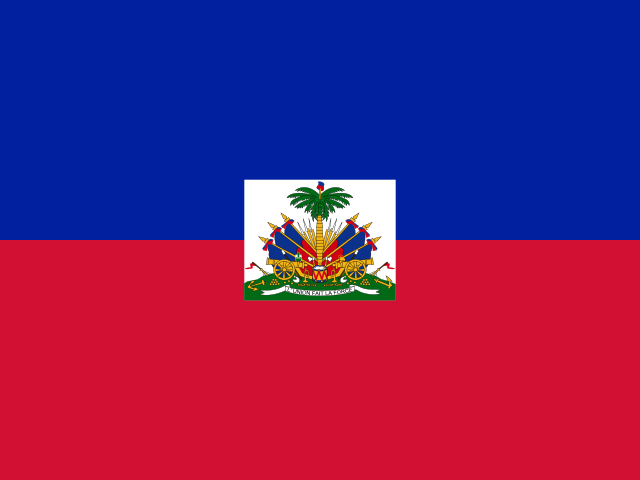
Location
Haiti is in the Caribbean, western one-third of the island of Hispaniola, between the Caribbean Sea and the North Atlantic Ocean, west of the Dominican Republic. It shares land borders with Dominican Republic (376 km) and has 1,771 km of coastline. The capital is Port-au-Prince.
Haiti population 2026: 12.04 Million — growth, rank & history →Key Statistics for 2026
Total population
Population Change
Median age of population
Population density
Life expectancy at birth
Agricultural land
Dam capacity per capita
Female population of reproductive age
Health Care Spending per Capita
Learning-adjusted years of school
Length of paid parental leave for mother
History
The history of Haiti is rich and complex, beginning with the arrival of the Arawak and Taíno peoples who inhabited the island of Hispaniola as early as 4000 BCE. These indigenous groups developed a vibrant culture with agricultural practices, fishing, and the establishment of villages. The island was first encountered by Europeans in 1492 when Christopher Columbus arrived, claiming it for Spain and naming it La Isla Española. This marked the beginning of a tumultuous colonial period, as the indigenous population suffered from diseases brought by Europeans and the harsh conditions of forced labor, leading to their rapid decline.
During the late 15th and 16th centuries, the Spanish established settlements, but it was not until the late 17th century that the French began to control the western portion of the island, which would later become Haiti. By the mid-18th century, this region developed into one of the most lucrative colonies in the Americas, primarily due to its sugar and coffee plantations reliant on enslaved African labor. The harsh conditions and the desire for freedom led to the Haitian Revolution, which began in 1791. This uprising, characterized by significant figures such as Toussaint Louverture, culminated in Haiti declaring independence from France on January 1, 1804, making it the first independent black-led nation in the world and the second independent country in the Americas.
The 19th and early 20th centuries were marked by political instability and economic challenges. Following independence, Haiti faced international isolation and was forced to pay reparations to France, which crippled its economy. The early 20th century saw a U.S. occupation from 1915 to 1934, during which time the U.S. sought to stabilize the region but also faced resistance from Haitian nationalists. After the occupation, Haiti oscillated between authoritarian regimes and democratic governance, with significant periods of turmoil, including the dictatorship of François "Papa Doc" Duvalier and his son Jean-Claude "Baby Doc" Duvalier, who ruled from 1957 to 1986.
In recent decades, Haiti has faced numerous challenges, including political instability, natural disasters, and economic hardships. The devastating earthquake in January 2010 resulted in widespread destruction and loss of life, leading to a significant humanitarian crisis. Despite these challenges, Haiti remains a resilient nation with a rich cultural heritage that influences Caribbean identity and politics. The country's ongoing struggles and efforts toward rebuilding and democracy continue to capture the attention of the global community, highlighting Haiti's historical significance as a symbol of resistance and resilience.
Geography
Haiti is situated on the island of Hispaniola in the Greater Antilles archipelago, sharing its western border with the Dominican Republic. It lies between latitudes 18° and 20° N and longitudes 72° and 75° W. The country covers an area of approximately 27,750 square kilometers (10,714 square miles), making it the third-largest nation in the Caribbean. The northern coast is bordered by the Atlantic Ocean, while the southern coastline meets the Caribbean Sea. Haiti's geographical position places it near the Tropic of Cancer, influencing its climate and natural environment significantly.
The terrain of Haiti is predominantly mountainous, with notable mountain ranges such as the Massif de la Selle and the Massif de la Hotte, which feature the highest peak, Pic la Selle, at 2,680 meters (8,793 feet) above sea level. The country is also interspersed with valleys and plains, which provide fertile land for agriculture. Major rivers, including the Artibonite River, the longest river in Haiti, flow through the country, providing essential water resources. Haiti's rugged terrain can create challenges for infrastructure development and transportation, further complicating economic activities.
Haiti experiences a tropical climate characterized by a wet season from April to October and a dry season from November to March. The average temperature ranges from 20°C (68°F) to 30°C (86°F) throughout the year, with coastal areas typically being warmer than the mountainous regions. The country is also susceptible to natural disasters, including hurricanes and tropical storms, particularly during the hurricane season, which can lead to significant environmental and economic impacts.
Natural resources in Haiti include bauxite, copper, gold, and marble, although the exploitation of these resources has been limited due to political instability and inadequate infrastructure. The country also has a rich biodiversity, with various ecosystems ranging from coastal wetlands to mountainous forests. However, environmental degradation, deforestation, and soil erosion are significant concerns that threaten Haiti's natural environment. Efforts to promote sustainable development and conservation are critical to address these challenges and protect Haiti's unique geographical and ecological characteristics.
Government
Haiti operates as a semi-presidential representative democratic republic, where the President serves as both the head of state and the commander-in-chief of the armed forces, while the Prime Minister acts as the head of government. The political system is characterized by a multi-party framework, though it has faced significant challenges, including political instability and corruption. The Constitution of 1987, which was revised in 2012, outlines the fundamental principles of governance and the rights of citizens, establishing a commitment to democracy and the rule of law.
The structure of the Haitian government is divided into three branches: the executive, the legislative, and the judicial. The executive branch is headed by the President, who is elected for a five-year term and can serve only one consecutive term. The Prime Minister, appointed by the President, manages the day-to-day operations of the government. The legislative branch consists of a bicameral parliament, which includes the Chamber of Deputies and the Senate. The Chamber has 119 members elected for four-year terms, while the Senate has 30 members elected for six-year terms. The judicial branch is independent and is responsible for upholding the Constitution and ensuring justice, with the Supreme Court serving as the highest court in the land.
Key institutions that play a significant role in Haiti's governance include the Electoral Council, responsible for overseeing elections, and the National Palace, which serves as the official residence of the President. The political landscape in Haiti is marked by a history of strongman rule, coups, and a struggle for democratic governance. The political environment has been influenced by various parties, notably the Haitian Tèt Kale Party (PHTK), which has been prominent in recent years, as well as other political movements that advocate for social justice and reform.
The electoral system in Haiti has been fraught with challenges, including allegations of fraud and violence during elections, leading to significant public distrust. Elections are held for both the presidency and the legislature, typically conducted every four years. However, the political landscape remains volatile, with frequent changes in leadership and ongoing social unrest, complicating efforts to stabilize governance. Despite these challenges, the Haitian populace remains actively engaged in political processes, demonstrating resilience and a desire for democratic accountability.
Economy
The economy of Haiti is classified as a developing economy that has faced significant challenges over the years. As of 2023, Haiti's Gross Domestic Product (GDP) is estimated at approximately $15 billion, with a GDP per capita of around $1,300. The country's economy is heavily reliant on agriculture, manufacturing, and remittances from Haitians living abroad. Despite its potential, Haiti's economic growth has been hampered by political instability, natural disasters, and inadequate infrastructure.
Haiti's major industries include agriculture, textiles, and tourism. Agriculture employs a large portion of the population, with key crops including coffee, mangoes, and sugarcane. The textile and apparel industry has seen growth due to favorable trade agreements, including the HOPE and HELP Acts, which facilitate exports to the United States. However, the tourism sector, which has the potential to be a significant contributor to the economy, remains underdeveloped, with challenges such as inadequate facilities and security concerns limiting its growth.
Trade relationships are crucial for Haiti’s economy, as the country relies heavily on imports to meet its needs. The United States is Haiti's largest trading partner, accounting for a significant portion of both imports and exports. In 2022, exports were valued at approximately $1.2 billion, primarily consisting of textiles, agricultural products, and handicrafts. Conversely, imports amounted to around $4.5 billion, with the majority comprising food, fuel, and manufactured goods. This trade imbalance highlights the need for Haiti to improve its domestic production capabilities and diversify its economy.
Despite the numerous economic challenges, including high unemployment rates and vulnerability to natural disasters, Haiti also has opportunities for growth. The country’s young workforce and potential for agricultural development present avenues for investment and innovation. International organizations and foreign investors are increasingly looking at Haiti for opportunities in renewable energy, agriculture, and tourism. By addressing infrastructure deficits and enhancing political stability, Haiti could harness its resources more effectively and work towards sustainable economic development.
Culture
Haiti's cultural landscape is a vibrant tapestry woven from its diverse languages, religions, and ethnic groups. The official languages are Haitian Creole and French, with Creole being spoken by the vast majority of the population. This linguistic duality reflects Haiti's colonial history and its struggle for independence. The predominant religion is Roman Catholicism, often intertwined with elements of Vodou, a spiritual tradition that plays a significant role in the lives of many Haitians. Ethnically, the population is primarily of African descent, with a small percentage of mixed-race individuals and a minority of European ancestry, primarily stemming from the colonial era.
Haitian cultural traditions and customs are rich and varied, often characterized by communal values and a strong sense of identity. Festivals such as Carnival are celebrated with great enthusiasm, showcasing colorful parades, traditional music, and dance. In rural areas, practices such as storytelling and oral traditions remain vital, preserving the history and beliefs of communities. Family plays an essential role in daily life, with gatherings often centered around shared meals and celebrations, reinforcing familial bonds and cultural heritage.
The arts, music, and literature of Haiti reflect its complex history and cultural diversity. Music genres such as Kompa and Rara are integral to the Haitian experience, combining African rhythms with European influences. Renowned artists like Wyclef Jean have propelled Haitian music onto the global stage. In literature, writers such as Edwidge Danticat have gained international acclaim, often exploring themes of identity, exile, and resilience. Visual arts also thrive, with vibrant paintings and sculptures that often depict daily life, spirituality, and social issues.
The cuisine of Haiti is a reflection of its rich cultural heritage, characterized by bold flavors and the use of fresh ingredients. Staples include rice and beans, often served with a variety of meats and vegetables. Popular dishes such as Griot (fried pork) and pikliz (spicy pickled vegetables) showcase the country’s culinary creativity. Daily life in Haiti is often marked by a blend of tradition and modernity, with urban centers bustling with activity while rural communities maintain a slower pace, centered around agriculture and local markets. This dynamic lifestyle underscores the resilience and adaptability of the Haitian people amidst historical challenges.
About This Data
This page displays comprehensive statistical data for Haiti for the year 2026. All data points are sourced from authoritative international organizations and are regularly updated to ensure accuracy and reliability.
Click on any statistic to explore more detailed information, see how Haiti compares with other countries, and view historical trends.
Primary Data Sources
CIA World Factbook
Comprehensive country profiles and demographic statistics from the Central Intelligence Agency
Learn moreUnited Nations Statistics
Global demographic data and population projections from UN agencies and research divisions
Learn moreWorld Bank Open Data
Development indicators and comprehensive population metrics from the World Bank database
Learn moreCompare Haiti with other countries
Side-by-side comparisons across population, GDP, geography, and more.
Frequently Asked Questions About Haiti
Which continent is Haiti in?▾
Haiti is in North America, in the Caribbean subregion according to the UN geoscheme.
What is the population of Haiti in 2026?▾
The population of Haiti in 2026 is approximately 12,039,634 persons.
What is the GDP of Haiti in 2026?▾
The Gross Domestic Product (GDP) of Haiti in 2026 is 28,291,405,702.17 US dollars.
What is the life expectancy in Haiti?▾
The life expectancy at birth in Haiti is 69.83 years.
What is the total fertility rate in Haiti?▾
The total fertility rate in Haiti is 2.54 children per woman.
What percentage of Haiti's population lives in urban areas?▾
83.32% of Haiti's population lives in urban areas.
What is the official language of Haiti?▾
The official languages of Haiti are Haitian Creole and French.