
Eastern and South-Eastern Asia Population density 2026: 144.98 per sq. km
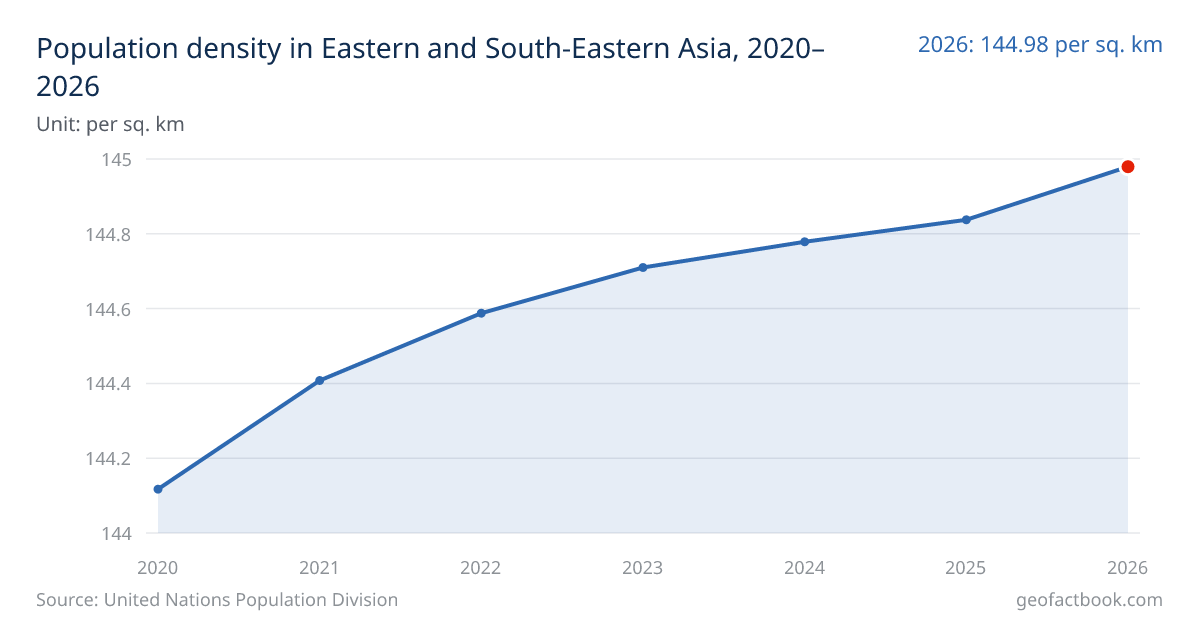
Eastern and South-Eastern Asia's population density in 2026 is 144.98 per sq. km (estimate), up 0.1% from 2025.
Population density measures how many people live per square kilometer in a country, highlighting urbanization and resource distribution. Understanding this statistic is crucial for assessing living conditions, infrastructure needs, and environmental impact.
Estimated value for 2026 (interpolated, no direct source).
Population density over timeSome values are estimated based on historical trends
| Year | Value | Change | % Change | Actions |
|---|---|---|---|---|
| 2026 | 144.98 per sq. km | +0.14 per sq. km | +0.10% | |
| 2025 | 144.84 per sq. km | +0.06 per sq. km | +0.04% | |
| 2024 | 144.78 per sq. km | +0.07 per sq. km | +0.05% | |
| 2023 | 144.71 per sq. km | +0.12 per sq. km | +0.08% | |
| 2022 | 144.59 per sq. km | +0.18 per sq. km | +0.12% | |
| 2021 | 144.41 per sq. km | +0.29 per sq. km | +0.20% | |
| 2020 | 144.12 per sq. km | — | — |
Population density in Eastern and South-Eastern Asia, 2020–2026: chart
Cite this page
Geo Factbook. (n.d.). Eastern and South-Eastern Asia: Population density. Retrieved November 29, 2026, from https://geofactbook.com/countries/eastern-and-south-eastern-asia/population-density
The figures on this page come from United Nations Population Division. For academic work, cite the original source as well.
Frequently Asked Questions About Eastern and South-Eastern Asia Population density
What is Eastern and South-Eastern Asia's population density in 2026?▾
Eastern and South-Eastern Asia's population density is 144.98 per sq. km in 2026 (estimate), according to United Nations Population Division.
Is Eastern and South-Eastern Asia's population density increasing or decreasing?▾
Eastern and South-Eastern Asia's population density rose by 0.1% from 2025 (144.84 per sq. km) to 2026 (144.98 per sq. km).
What was Eastern and South-Eastern Asia's population density in 2020?▾
In 2020, Eastern and South-Eastern Asia's population density was 144.12 per sq. km. By 2026 it rose by 0.6%.
Explore additional statistical insights
Total population in Eastern and South-Eastern Asia
Discover the latest total population statistics for every country and region worldwide. Explore accurate, up-to-date data on global population growth, density, and demographic trends — sourced from trusted international databases like the UN and World Bank. Perfect for researchers, students, and data enthusiasts looking to understand how the world’s population is changing.
Life expectancy at birth in Eastern and South-Eastern Asia
Life expectancy at birth measures the average years a newborn is expected to live, reflecting a country's health standards and quality of life. This vital statistic highlights disparities in healthcare and living conditions across nations, making it essential for global health assessments.
Total demand for family planning (Percent) in Eastern and South-Eastern Asia
Total demand for family planning measures the percentage of individuals seeking access to reproductive health services. Understanding this statistic is crucial for addressing global population growth and improving health outcomes.
Population Change in Eastern and South-Eastern Asia
This statistic measures population change across countries, highlighting shifts in demographics. Understanding these changes is crucial for planning resources, economic growth, and social services.
Under-five mortality rate in Eastern and South-Eastern Asia
The under-five mortality rate measures the number of deaths per 1,000 live births for children under five. This critical statistic highlights child health and development, reflecting a country's healthcare quality and socioeconomic conditions. Understanding these rates is vital for improving global health initiatives.
Currently married (Percent) in Eastern and South-Eastern Asia
The percentage of currently married individuals by country highlights societal trends in family structure and relationships. Understanding these statistics can provide insights into cultural norms and demographic shifts, influencing policies and social programs.