
Central African Republic Median age of population 2026: 14.46 years
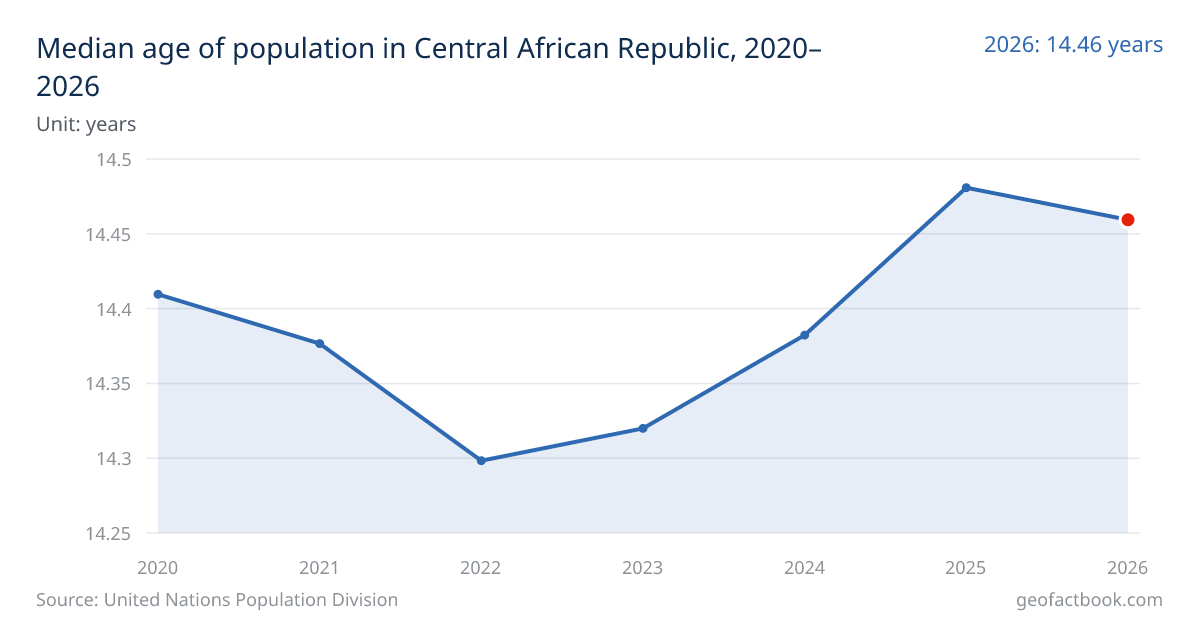
Central African Republic's median age of population in 2026 is 14.46 years (estimate), down 0.1% from 2025. It ranks #236 of 236 countries.
The median age of a population is a key demographic indicator, reflecting the age distribution within a country. Understanding median age helps assess economic development, healthcare needs, and social dynamics. Countries with a higher median age may face challenges related to aging populations, while younger populations often indicate growth potential.
Estimated value for 2026 (interpolated, no direct source).
Where Central African Republic ranks (2026)
#236 of 236- #232
 Mali15.85 years
- #233
 Congo, Democratic Republic of the15.8 years
- #234
 Niger15.7 years
- #235
 Somalia15.65 years
- #236
 Central African Republic14.46 years
Median age of population over timeSome values are estimated based on historical trends
| Year | Value | Change | % Change | Actions |
|---|---|---|---|---|
| 2026 | 14.46 years | 0.02 years | -0.15% | |
| 2025 | 14.48 years | +0.1 years | +0.69% | |
| 2024 | 14.38 years | +0.06 years | +0.44% | |
| 2023 | 14.32 years | +0.02 years | +0.15% | |
| 2022 | 14.3 years | 0.08 years | -0.54% | |
| 2021 | 14.38 years | 0.03 years | -0.23% | |
| 2020 | 14.41 years | — | — |
Median age of population in Central African Republic, 2020–2026: chart
Cite this page
Geo Factbook. (n.d.). Central African Republic: Median age of population. Retrieved November 28, 2026, from https://geofactbook.com/countries/central-african-republic/median-age-of-population
The figures on this page come from United Nations Population Division. For academic work, cite the original source as well.
Frequently Asked Questions About Central African Republic Median age of population
What is Central African Republic's median age of population in 2026?▾
Central African Republic's median age of population is 14.46 years in 2026 (estimate), according to United Nations Population Division.
Is Central African Republic's median age of population increasing or decreasing?▾
Central African Republic's median age of population fell by 0.1% from 2025 (14.48 years) to 2026 (14.46 years).
How does Central African Republic rank for median age of population?▾
In 2026, Central African Republic has the 236th highest median age of population out of 236 countries with data.
What was Central African Republic's median age of population in 2020?▾
In 2020, Central African Republic's median age of population was 14.41 years. By 2026 it rose by 0.3%.
Explore additional statistical insights
Female population of reproductive age in Central African Republic
The female population of reproductive age is a crucial demographic statistic that influences healthcare, economic growth, and social policies in countries. Understanding this population helps address reproductive health needs and support family planning initiatives.
Length of paid parental leave for mother in Central African Republic
Discover how the length of paid parental leave for mothers varies by country, impacting family well-being and workforce participation. Explore the statistics that highlight this critical social issue.
Education Expenditure (% of GDP) in Central African Republic
Education expenditure measures the percentage of GDP spent on education. Compare countries and explore interactive rankings and trends.
Fixed Broadband Penetration Rate in Central African Republic
Fixed broadband penetration rate indicates the proportion of households with broadband access, reflecting connectivity.
Old-Age Dependency Ratio in Central African Republic
Old-age dependency ratio compares the number of elderly dependents to working-age people, affecting economic sustainability.
Learning-adjusted years of school in Central African Republic
Learning-adjusted years of school measures educational quality by accounting for both enrollment and learning outcomes. This statistic highlights the effectiveness of education systems across countries, emphasizing the need for improved learning environments.